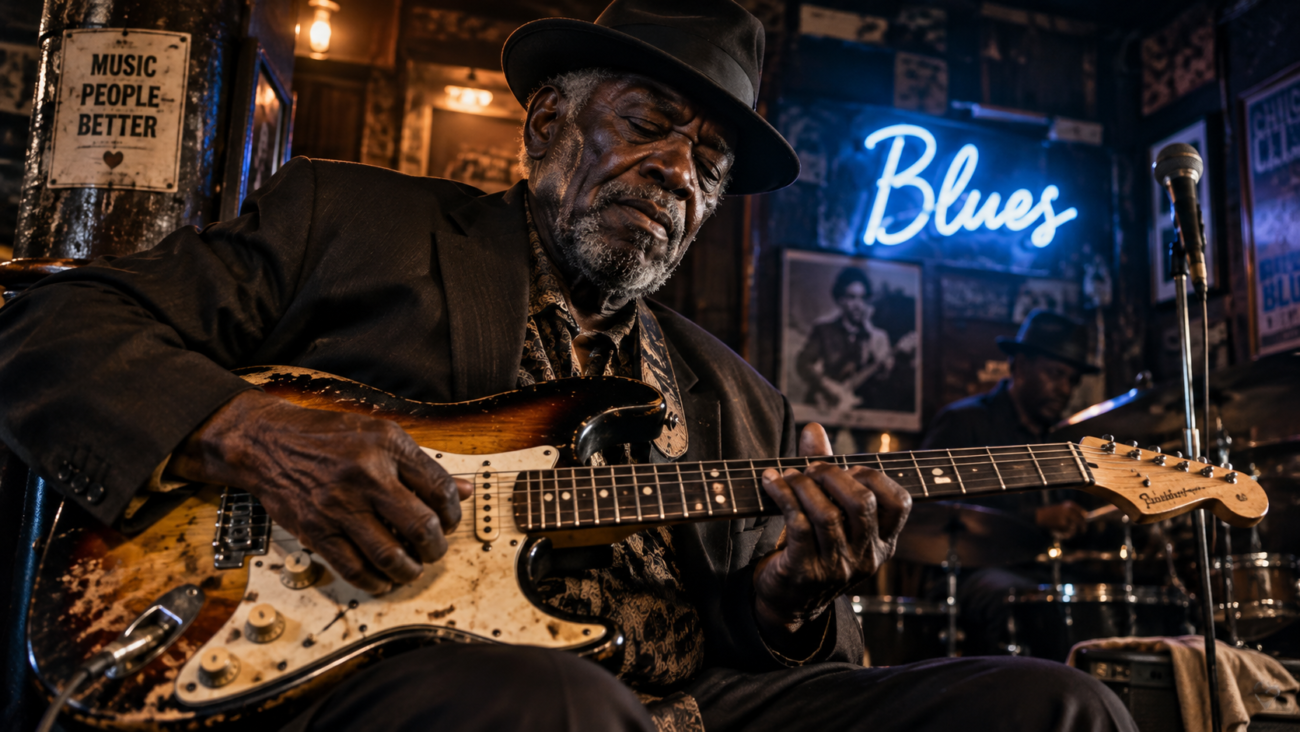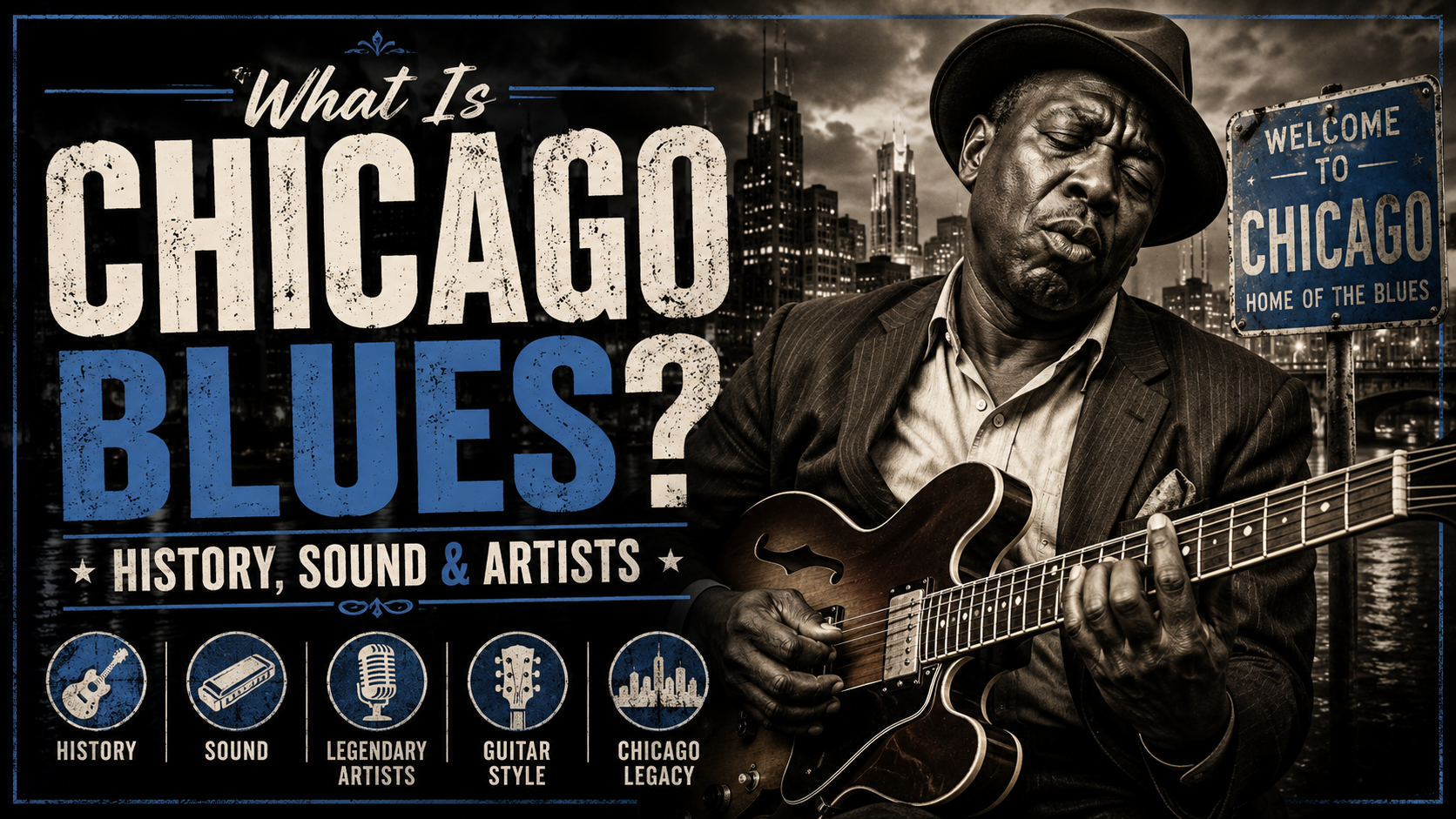

BluesMusica.com: What is Chicago Blues? Chicago Blues is one of the most influential forms of American blues music, famous for transforming rural Southern blues traditions into a powerful urban and electric sound. With electric guitars, amplified harmonica, bass, drums, piano, and passionate vocals, Chicago Blues became one of the foundations of modern blues, rock and roll, and blues rock.
The story of Chicago Blues is closely connected to the Great Migration, when millions of African Americans moved from the rural South to cities including Chicago during the 20th century. Musicians brought their Southern musical traditions with them and adapted those traditions to a new urban environment. The result was a louder, electrified form of blues that became strongly associated with Chicago.
The Library of Congress documents how blues musicians migrated north and how amplified groups featuring electric guitars and drums became increasingly important during the 1940s and 1950s. :contentReference[oaicite:1]{index=1}
What Is Chicago Blues?
Chicago Blues is an urban form of blues music that developed in Chicago, Illinois, during the 20th century.
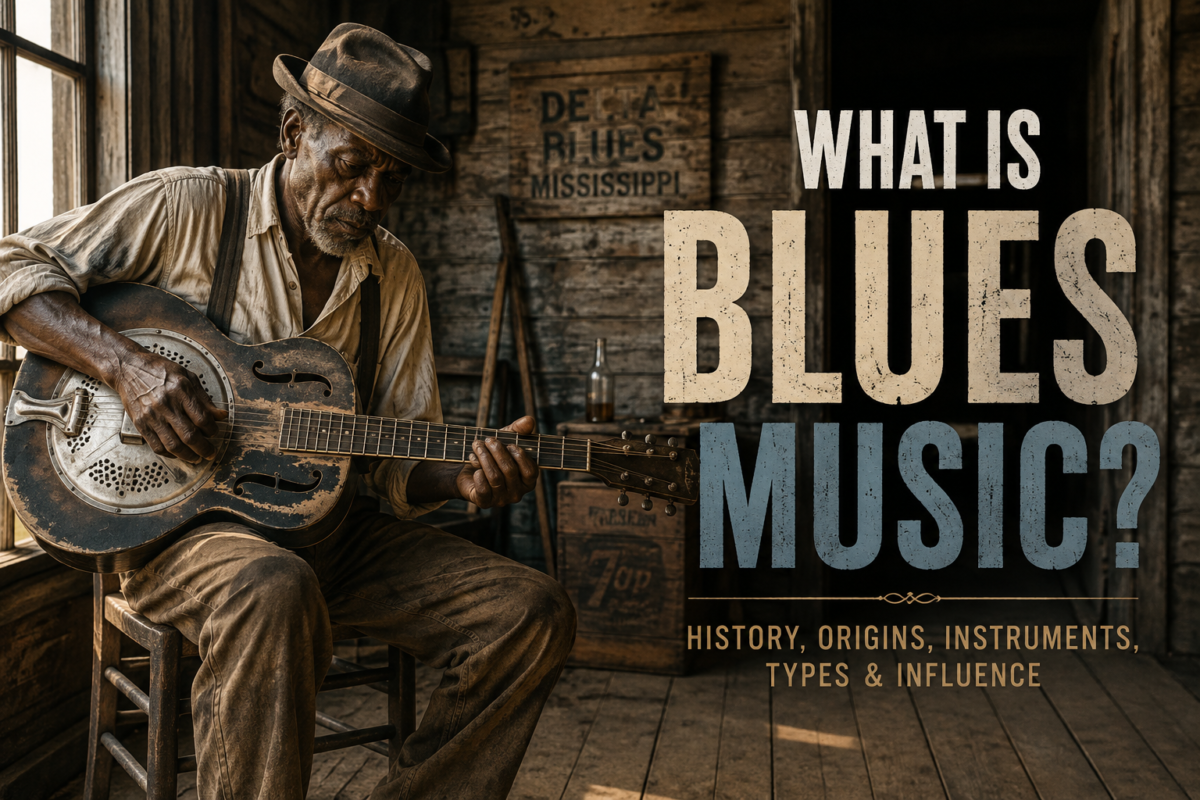
Its musical roots are strongly connected to Southern blues traditions, particularly Mississippi Delta Blues. However, musicians in Chicago changed the sound by using amplification, electric guitars, harmonica microphones, bass, drums, piano, and larger ensembles.
The result was a more powerful sound designed for busy urban clubs, bars, theaters, and dance halls.
Chicago Blues therefore represents more than simply a geographic location. It represents a major transformation in the history of blues music.
Where Did Chicago Blues Originate?
Chicago Blues developed in Chicago, Illinois, particularly within African American communities on the city’s South Side and West Side.
During the Great Migration, African Americans moved from Southern states to Northern and Midwestern cities in search of jobs, greater opportunities, and escape from the racial violence and restrictions of the Jim Crow South.
The Library of Congress describes the Great Migration as one of the largest internal migrations in American history, with millions of African Americans moving from rural areas to cities including Chicago. :contentReference[oaicite:2]{index=2}
Musicians were part of this movement.
They carried the sounds of Mississippi, Louisiana, Arkansas, Tennessee, and other Southern regions into Chicago’s growing neighborhoods.
The Great Migration and Chicago Blues
The Great Migration is one of the most important reasons Chicago became a center of American blues music.
From the 1910s through much of the 20th century, millions of Black Americans moved north and west. Chicago became one of the most important destinations.
The Library of Congress notes that the Great Migration transformed American life and helped create new cultural communities in cities such as Chicago. :contentReference[oaicite:3]{index=3}
These new communities created an environment where musicians could find audiences, clubs, recording opportunities, and other musicians.
Southern blues was no longer limited to rural communities.
It became part of an increasingly urban musical culture.
How Delta Blues Became Chicago Blues
Chicago Blues did not appear out of nowhere.
Much of its musical vocabulary came from Southern blues traditions, especially the Mississippi Delta.
Musicians who had grown up playing acoustic guitar and singing in rural communities adapted their music after arriving in Chicago.
In a small rural setting, an acoustic guitar could be powerful enough for a small audience.
In a crowded Chicago club filled with people, however, the musician needed amplification.
Electric guitars, microphones, amplifiers, drums, bass, and amplified harmonicas allowed the blues to compete with the noise of urban nightlife.
Smithsonian’s history of Chicago Blues describes this transformation as Southern blues traditions merging with an increasingly electric and urban ensemble sound. :contentReference[oaicite:4]{index=4}
The Rise of Electric Chicago Blues
The electric guitar became one of the defining characteristics of Chicago Blues.
Amplification allowed guitarists to play with greater volume and sustain while also creating new possibilities for tone and expression.
Harmonica players also began using microphones and amplifiers to produce a thick, aggressive sound.
Bass and drums provided a stronger rhythmic foundation, while piano often added boogie-woogie patterns and blues chords.
The combination created a powerful ensemble sound that became known around the world as Chicago Blues.
What Does Chicago Blues Sound Like?
So, what does Chicago Blues sound like?
Classic Chicago Blues is generally louder, fuller, and more heavily amplified than traditional Delta Blues.
Common characteristics include:
- Electric guitar
- Amplified harmonica
- Electric or upright bass
- Drums
- Piano
- Powerful blues vocals
- Strong rhythmic grooves
- Call-and-response
- Blues guitar riffs
- Improvisation
- 12-bar blues structures
- Raw and expressive performances
The sound can range from slow and heavy blues to energetic shuffle rhythms.
The combination of guitar, harmonica, bass, drums, and vocals created a musical conversation between several performers rather than the mostly solo format commonly associated with early rural blues.
Chicago Blues Instruments
One of the easiest ways to recognize Chicago Blues is by its instrumentation.
Electric Guitar
The electric guitar became central to the Chicago sound.
Players could use amplification to produce sustained notes, aggressive riffs, powerful chords, and expressive bends.
Blues Harmonica
The harmonica became another defining instrument.
Players such as Little Walter transformed the instrument by combining it with amplification and aggressive blues phrasing.
Bass
Bass provided the low-end foundation for the band and helped establish the groove.
Drums
Drums allowed Chicago Blues musicians to create a stronger rhythmic drive than was normally possible with a solo acoustic guitar.
Piano
Piano remained important in Chicago Blues, particularly through the influence of boogie-woogie and earlier urban blues traditions.
Muddy Waters and the Chicago Blues Revolution
Muddy Waters is one of the most important figures in the development of Chicago Blues.
Born McKinley Morganfield in Mississippi, Waters developed his early musical style in the Delta before moving to Chicago.
His journey represents the transformation of Southern blues into urban electric blues.
The Library of Congress documents Waters’ early recordings in Mississippi and his later importance in Chicago Blues. :contentReference[oaicite:5]{index=5}
In Chicago, Waters developed a powerful electric sound that helped define the direction of blues during the late 1940s and 1950s.
His bands featured some of the most important blues musicians of the period.
His influence eventually reached British blues musicians and rock guitarists who discovered Chicago Blues recordings during the 1960s.
Howlin’ Wolf
Howlin’ Wolf was another giant of Chicago Blues.
His enormous voice, intense stage presence, and powerful recordings became essential parts of the Chicago Blues tradition.
His music was frequently darker and heavier than many other blues performers of the period.
Howlin’ Wolf also worked with important musicians and songwriters including Willie Dixon.
Willie Dixon
Willie Dixon was a major songwriter, bassist, producer, and arranger in the Chicago Blues scene.
His compositions became some of the most recognizable songs in blues history.
Dixon worked with artists including Muddy Waters and Howlin’ Wolf and helped shape the sound of Chicago’s recording industry.
His songwriting also became enormously influential when British rock musicians later recorded blues compositions associated with Chicago.
Little Walter
Little Walter transformed blues harmonica.
Instead of treating the harmonica simply as a quiet acoustic instrument, he used amplification to create a powerful, distorted sound that could compete with electric guitars and drums.
His approach became one of the defining sounds of Chicago Blues.
Elmore James
Elmore James brought an explosive slide-guitar approach to electric blues.
His amplified guitar tone became one of the most recognizable sounds in post-war blues.
James also demonstrated how traditional Delta slide guitar techniques could be transformed through electric amplification.
Koko Taylor
Koko Taylor became one of the most important female voices in Chicago Blues.
Known for her powerful vocal delivery, she helped carry the Chicago Blues tradition into later generations.
Her career also demonstrates that Chicago Blues was not exclusively a male musical tradition.
Buddy Guy
Buddy Guy became one of the most influential guitarists associated with Chicago Blues.
His aggressive guitar playing, emotional vocals, and energetic performances helped connect traditional Chicago Blues with the blues-rock generation.
His influence can be heard in guitarists who followed, particularly musicians who wanted to combine blues feeling with louder electric guitar performances.
Chess Records and Chicago Blues
The development of Chicago Blues cannot be separated from the recording industry.
Chess Records became one of the most important record labels in blues history.
The label recorded major Chicago Blues artists and helped distribute their music beyond Chicago.
Smithsonian’s history of Chicago Blues identifies Chess Records and other independent labels as important forces in the development and spread of the Chicago sound. :contentReference[oaicite:6]{index=6}
Through records, the Chicago Blues sound reached listeners across the United States and eventually Europe.
Chicago Blues Clubs
Chicago’s clubs were essential to the development of the genre.
Musicians needed places to perform, experiment, compete, and develop their sound.
Venues on the South Side and West Side became important gathering places for Chicago’s Black communities.
Maxwell Street also became famous for its street musicians and blues culture.
Chicago’s blues clubs helped transform the music from a rural Southern tradition into a major urban entertainment culture.
Maxwell Street and Chicago Blues
Maxwell Street became one of the legendary locations associated with Chicago Blues.
The street’s market attracted musicians, vendors, workers, immigrants, and residents, creating an environment where live music could flourish.
Blues musicians performed in and around the area, helping make the street part of Chicago’s musical history.
Although the neighborhood changed dramatically over time, Maxwell Street remains an important symbol of the city’s blues heritage.
Chicago Blues vs Delta Blues
| Feature | Delta Blues | Chicago Blues |
|---|---|---|
| Primary environment | Rural Southern communities | Urban Chicago |
| Typical guitar | Often acoustic | Often electric |
| Performance | Solo or small group | Full band |
| Harmonica | Acoustic | Often amplified |
| Bass | Often absent in solo performances | Common |
| Drums | Often absent in solo performances | Common |
| Overall sound | Raw and intimate | Loud and powerful |
The two traditions are closely connected rather than completely separate.
Chicago Blues took many musical ideas from Southern blues and transformed them for an urban environment.
Chicago Blues vs Electric Blues
The terms Chicago Blues and Electric Blues are sometimes used interchangeably, but they are not exactly the same thing.
Electric Blues is a broader category describing blues performed with amplified instruments.
Chicago Blues is a specific regional tradition that developed in Chicago and became famous for its particular combination of Delta roots, electric guitar, amplified harmonica, rhythm section, piano, and powerful vocals.
Chicago Blues and Rock and Roll
Chicago Blues played a major role in the development of later rock music.
American blues recordings reached young musicians in Britain and the United States during the 1950s and 1960s.
Artists studied the guitar riffs, harmonica lines, rhythms, and songwriting of Chicago Blues musicians.
The influence became especially visible in blues rock.
Groups and guitarists used Chicago Blues as a foundation for louder electric music.
The musical connection between Chicago Blues and rock is one reason the genre remains so important to modern guitar music.
British Blues and Chicago Blues
During the 1960s, British musicians became deeply interested in American blues.
Recordings by Muddy Waters, Howlin’ Wolf, Little Walter, Elmore James, and other Chicago musicians became important references for British blues artists.
Musicians such as Eric Clapton and other blues-rock guitarists studied these recordings and introduced blues influences to new audiences.
This created a musical feedback loop: Southern American blues influenced Chicago Blues, Chicago Blues influenced British blues, and British blues helped introduce these traditions to a massive international rock audience.
For more on this journey, read our article about Eric Clapton’s Blues Career Path.
Chicago Blues and B.B. King
B.B. King was not simply a Chicago Blues musician, but his career demonstrates the wider influence of electric blues.
King developed his own distinctive style, combining Southern blues traditions with electric guitar and sophisticated phrasing.
His music shared the larger post-war electric blues environment that Chicago musicians helped establish.
Read our related article about Who Created Blues Music? for more background on the development of blues.
Why Is Chicago Blues Important?
Chicago Blues is important because it transformed the sound and possibilities of blues music.
It showed that traditional Southern blues could survive and evolve in a modern urban environment.
It also created a musical language that could be played by large electric bands and heard by audiences in crowded clubs.
The style influenced blues musicians around the world and became one of the major foundations of blues rock.
The Library of Congress notes that amplified blues groups featuring artists such as Muddy Waters, Howlin’ Wolf, Elmore James, and B.B. King became central to the development of urban blues during this period. :contentReference[oaicite:7]{index=7}
What Makes Chicago Blues Different?
Several characteristics make Chicago Blues immediately recognizable.
- Strong electric guitar
- Amplified harmonica
- Driving rhythm section
- Powerful vocals
- Blues guitar riffs
- Call-and-response arrangements
- Shuffle rhythms
- Improvisation
- Raw emotional delivery
- Full-band arrangements
However, Chicago Blues is not limited to one tempo or one arrangement.
It can be slow, dark, aggressive, funky, soulful, or energetic.
What Are the Most Famous Chicago Blues Songs?
Chicago Blues produced an enormous catalog of influential recordings.
Some songs strongly associated with the tradition include recordings by Muddy Waters, Howlin’ Wolf, Little Walter, Willie Dixon, Elmore James, Koko Taylor, and Buddy Guy.
Many of these recordings later became important sources for blues-rock musicians.
The exact definition of a “Chicago Blues song” can vary because musicians moved between regional styles and recording labels, but the Chicago sound is clearly present across the classic post-war blues catalog.
Is Chicago Blues Still Popular Today?
Yes.
Chicago remains strongly associated with blues culture, live performances, blues clubs, festivals, and musicians.
The city’s blues heritage continues to influence contemporary musicians while preserving the traditions developed during the post-war era.
The Smithsonian has described Chicago as a major center of blues culture and documented how the city’s South and West Side communities helped create the electric Chicago sound. :contentReference[oaicite:8]{index=8}
Chicago Blues Today
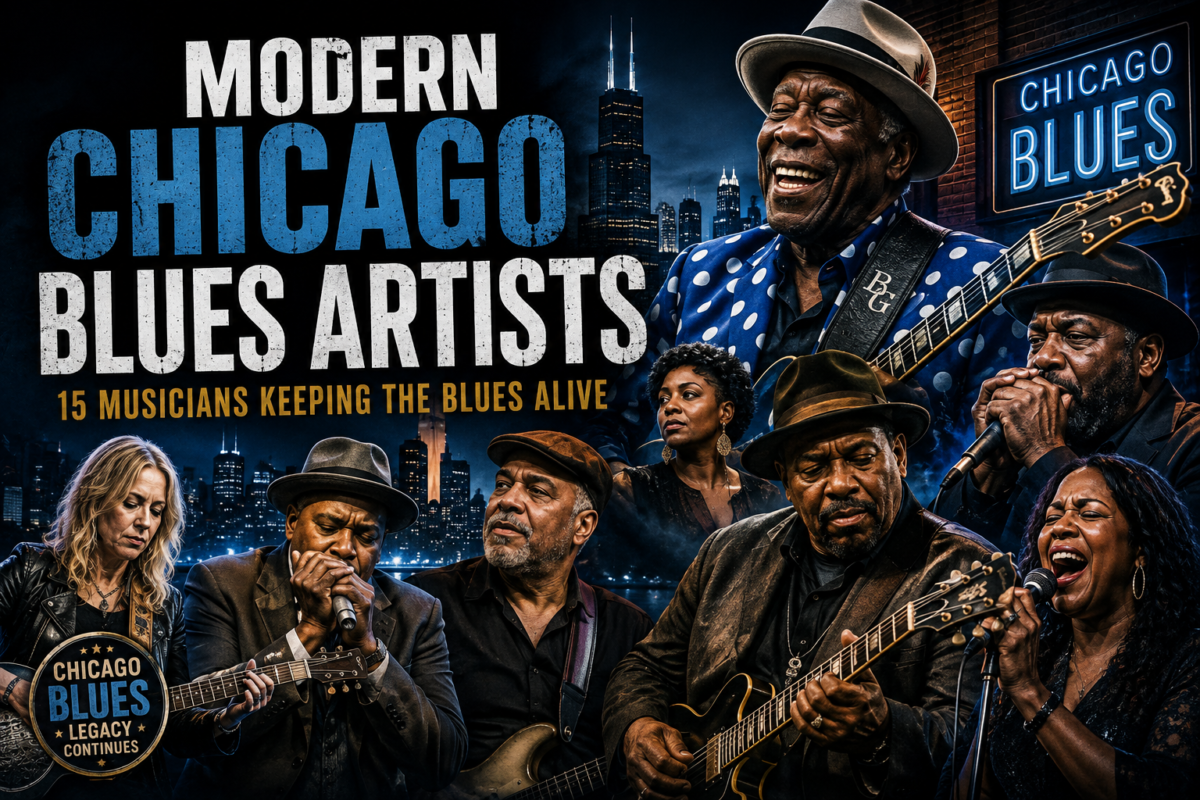
Modern Chicago Blues musicians continue to combine traditional blues vocabulary with contemporary sounds.
Some artists remain close to the classic electric blues approach, while others incorporate soul, funk, rock, R&B, and modern production.
Yet the essential ingredients remain familiar: expressive vocals, blues guitar, strong rhythm, improvisation, and the musical conversation between performers.
Listen to Chicago Blues
Chicago Blues is ultimately a music meant to be heard as much as studied. The electric guitar, harmonica, rhythm section, and vocals work together to create the distinctive urban blues sound that developed in Chicago.
Famous Chicago Blues Musicians
- Muddy Waters
- Howlin’ Wolf
- Willie Dixon
- Little Walter
- Elmore James
- Koko Taylor
- Buddy Guy
- Otis Rush
- Magic Sam
- Sonny Boy Williamson II
- Jimmy Reed
- Sunnyland Slim
Chicago Blues Frequently Asked Questions
What is Chicago Blues?
Chicago Blues is an urban electric style of blues that developed in Chicago, strongly influenced by Southern and Mississippi Delta Blues traditions.
Who started Chicago Blues?
Chicago Blues was not created by one person. It developed through the work of many Southern-born and Chicago-based musicians. Muddy Waters became one of the most important figures in defining the classic electric Chicago sound.
Is Chicago Blues the same as Delta Blues?
No. Delta Blues developed primarily in the rural Mississippi Delta, while Chicago Blues developed in an urban environment and became strongly associated with electric instruments and full bands. However, the two traditions are deeply connected.
Who is the most famous Chicago Blues musician?
Muddy Waters is one of the most famous and influential figures associated with Chicago Blues. Howlin’ Wolf, Little Walter, Willie Dixon, Buddy Guy, Koko Taylor, and many others are also central to its history.
What instruments are used in Chicago Blues?
Typical Chicago Blues instrumentation includes electric guitar, amplified harmonica, bass, drums, piano, and vocals.
Why did Chicago Blues become electric?
Amplification allowed musicians to be heard in crowded urban clubs and helped transform small-group Southern blues into a powerful ensemble sound.
Did Chicago Blues influence rock?
Yes. Chicago Blues became one of the major influences on blues rock and later rock guitar, particularly through the spread of American blues recordings during the 1950s and 1960s.
Is Chicago Blues still played today?
Yes. Chicago continues to have a strong blues tradition, and musicians around the world continue performing and recording Chicago-inspired blues.
Explore More Blues History
Continue exploring the history of blues with these related BluesMusica.com articles:
- What Is Delta Blues?
- Who Created Blues Music?
- Eric Clapton Blues Career Path
- Best Heavy Blues Songs
- House of Blues Orlando Concerts
Conclusion
Chicago Blues represents one of the most important transformations in the history of blues music.
Southern musicians carried their musical traditions north during the Great Migration, and Chicago provided a new urban environment where those traditions could evolve.
Acoustic guitars became electric. Small performances became full bands. Traditional harmonica became amplified. Southern blues rhythms met the energy of Chicago nightlife.
Musicians such as Muddy Waters, Howlin’ Wolf, Little Walter, Willie Dixon, Elmore James, Koko Taylor, and Buddy Guy helped establish a sound that would influence generations of blues and rock musicians.
From the Mississippi Delta to Chicago and eventually to audiences around the world, the story of Chicago Blues is ultimately the story of how blues music adapted, survived, and continued to evolve.
BluesMusica.com — Exploring the history, artists, sounds and continuing legacy of blues music.
what is chicago blues