

“`html
BluesMusica.com: What made T-Bone Walker’s guitar sound so unique? It was not simply his guitar or amplifier. His signature sound came from a combination of expressive single-note phrases, sophisticated chord voicings, precise string bends, jazz-influenced timing, and a remarkably controlled electric tone.
T-Bone Walker helped transform the electric guitar into a leading voice in blues music. His playing could sound smooth and elegant, yet full of emotion. A few carefully chosen notes could communicate more than a long series of fast runs.
His approach influenced generations of guitarists, including B.B. King, Chuck Berry, and many musicians who helped shape modern blues and rock guitar.
To understand his legacy, we need to look beyond the instrument itself and explore the musical ideas that made his sound instantly recognizable.
1. A Clean, Clear, and Expressive Electric Guitar Tone
One of the defining characteristics of T-Bone Walker’s sound was its clarity. His guitar tone was generally clean, bright, and articulate compared with the heavily distorted electric guitar sounds that became popular in later decades.
His notes had enough body to stand out in a band arrangement, but they retained definition. This allowed his melodic phrases to cut through the sound of horns, piano, bass, and drums without losing their musical detail.
Walker was closely associated with large Gibson hollowbody electric guitars, especially his famous 1949 Gibson ES-5N. The instrument’s three P-90 pickups offered different tonal possibilities, while its hollowbody construction contributed to its distinctive character.
His sound was not created by the guitar alone. The amplifier, playing technique, volume, and musical arrangement all contributed to the final result.
2. Single-Note Phrasing That Sounded Like a Horn
Walker developed a highly melodic single-note approach. His guitar lines often resembled the phrasing of a saxophone or trumpet.
Instead of playing long streams of notes, he built solos from short musical statements. Each phrase had a clear beginning, direction, and resolution.
This horn-like quality came from his articulation, rhythmic placement, note selection, and control of dynamics. His guitar seemed to speak in complete sentences rather than simply display technical ability.
This approach became an important influence on B.B. King, who later developed his own unmistakable single-string style.
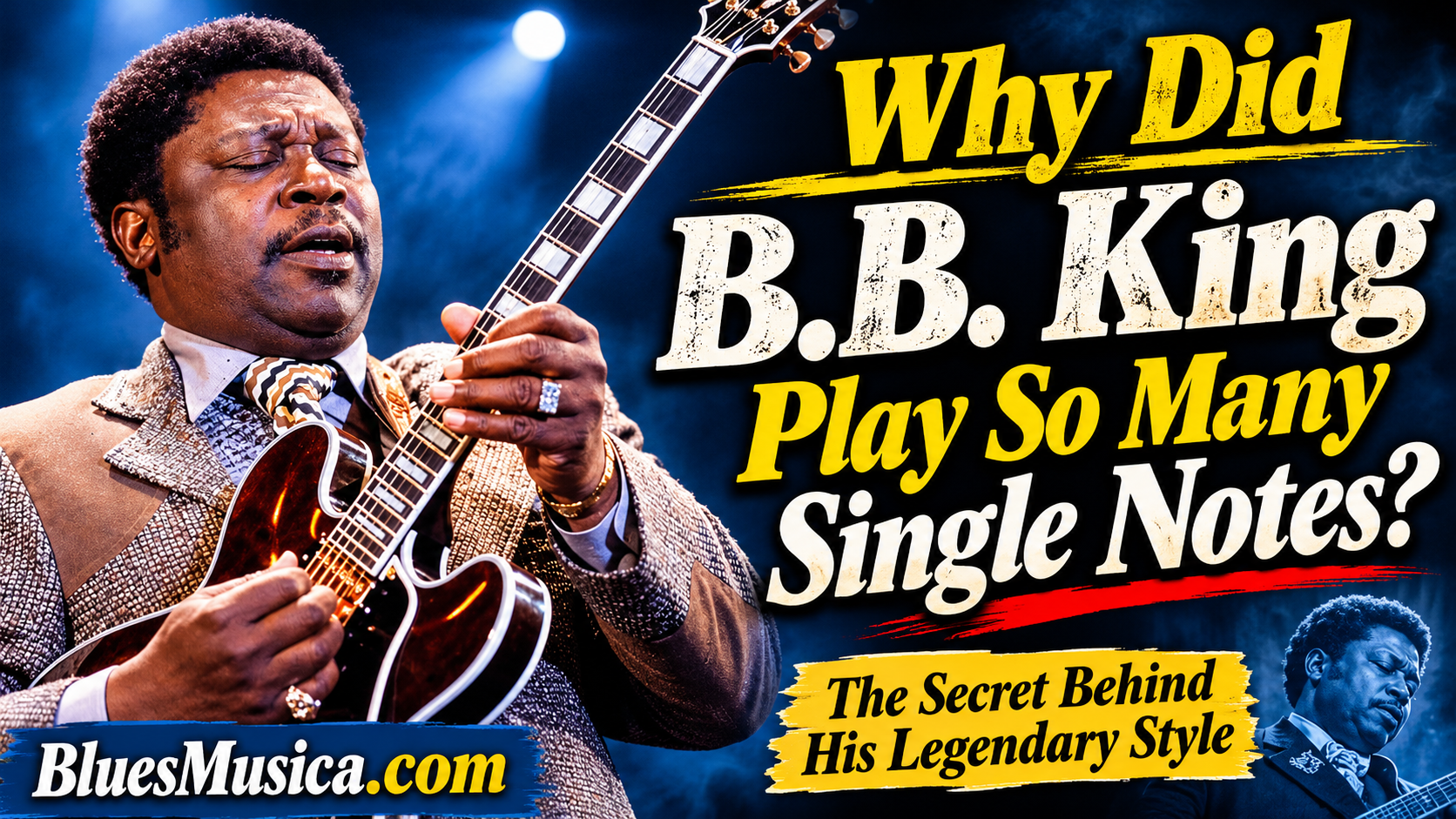
Read more: Why Did B.B. King Play So Many Single Notes?
3. Expressive String Bends and Unison Bends
One of Walker’s most recognizable techniques was his expressive use of string bending.
He could push a note slightly upward, creating tension before resolving it into another pitch. These bends gave his guitar phrases a vocal quality, making the instrument sound as if it were crying, laughing, or answering the singer.
He also used double-stops and distinctive unison bends, combining two notes to create a fuller and more dramatic sound.
These techniques became part of the vocabulary of electric blues and later rock guitar. Walker demonstrated that a bend was not merely a technical trick. It was a way to shape emotion.
4. Sophisticated Chords and Jazz Influences
T-Bone Walker’s playing was deeply connected to jazz and swing.
He used richer chord voicings, including sixth and ninth chords, to create a more sophisticated harmonic sound. Rather than relying exclusively on basic blues chords, he explored colors that worked beautifully with the horn arrangements and swinging rhythm sections of his era.
Guitarist Duke Robillard has discussed Walker’s use of sixth and ninth chords and the way his melodic lines worked around those harmonies.
This combination of blues feeling and jazz sophistication helped establish the distinctive character of Walker’s electric guitar style.
5. His Timing Made Every Note Count
Great guitar tone is not only about equipment. Timing is equally important.
Walker had a sophisticated sense of rhythm. His phrases could sit comfortably behind the beat, move ahead of it, or create unexpected accents within a swinging arrangement.
This rhythmic flexibility gave his solos personality. Even a simple phrase could become exciting because of where he placed each note.
His playing demonstrated that a guitarist does not need to fill every moment with sound. Silence and space can make the next note more powerful.
6. The Importance of His Gibson ES-5N
Walker is strongly associated with his blonde 1949 Gibson ES-5N, a hollowbody electric guitar equipped with three P-90 pickups.
The instrument became an important part of his image and musical history. Its three-pickup configuration offered tonal flexibility, while its large body and distinctive construction made it visually striking.
However, it would be misleading to suggest that the guitar alone created his signature sound. Another guitarist could play the same instrument and produce something completely different.
Walker’s touch, phrasing, timing, and musical imagination were the essential ingredients.
Read more: What Guitar Did T-Bone Walker Play?
7. He Combined Blues Emotion with Showmanship
T-Bone Walker understood that music was also a performance.
His stage presence became famous for its elegance and theatrical flair. He could play the guitar behind his head, hold it in unusual positions, and move across the stage while maintaining his musical performance.
But his showmanship never replaced the musical substance. His guitar playing remained melodic, controlled, and deeply connected to the blues.
He helped establish the image of the electric guitarist as both a musician and a central performer on stage.
8. How B.B. King and Other Guitarists Carried His Sound Forward
T-Bone Walker’s influence can be heard in the playing of many major guitarists.
B.B. King admired Walker’s expressive electric guitar style. King’s signature vibrato, melodic single-note phrasing, and emotional bends developed into a sound of his own, but Walker was an important influence on his musical direction.
Chuck Berry also absorbed ideas from earlier electric blues guitarists, helping bring blues-based guitar language into rock and roll.
Later musicians, including Jimi Hendrix and Eric Clapton, carried the electric guitar tradition into new musical territories.
Walker did not create every technique used by these musicians. His importance lies in how he brought together blues, jazz, swing, amplification, and showmanship into a distinctive musical language that others could build upon.
Explore more:
- How Did T-Bone Walker Change Electric Blues Guitar?
- Who Influenced B.B. King’s Guitar Playing?
- How Did B.B. King Develop His Signature Vibrato?
- How Did B.B. King Influence Guitar Players?
9. Essential T-Bone Walker Songs to Hear His Guitar Style
The best way to understand Walker’s sound is to listen to his recordings. These songs reveal different aspects of his musical personality.
Call It Stormy Monday (But Tuesday Is Just as Bad)
One of his signature recordings, featuring sophisticated blues phrasing, expressive guitar work, and a memorable vocal performance.
T-Bone Shuffle
A great example of his swinging rhythm, melodic guitar lines, and lively electric blues style.
Mean Old World
An important early electric recording that demonstrates his developing approach to amplified guitar and melodic improvisation.
I Got a Break, Baby
Another essential recording from his early electric period, showing his ability to combine blues expression with a polished band arrangement.
Watch and Explore – The Electric Blues Legacy
Experience the atmosphere of electric blues and explore the music that continues to inspire blues listeners around the world.
Continue exploring the legacy of B.B. King, one of the greatest guitarists to carry the electric blues tradition forward.
Frequently Asked Questions
What made T-Bone Walker’s guitar tone unique?
His tone combined clarity, brightness, warmth, and expressive articulation. His clean electric sound allowed his melodic phrases and string bends to remain distinct within a full band arrangement.
Did T-Bone Walker use distortion?
His best-known recordings generally feature a relatively clean electric guitar tone rather than the heavy distortion associated with later rock guitar styles.
What guitar did T-Bone Walker use?
He is most famously associated with a blonde 1949 Gibson ES-5N featuring three P-90 pickups. He also played other Gibson models during his career.
Was T-Bone Walker influenced by jazz?
Yes. Jazz and swing influenced his phrasing, chord choices, timing, and arrangements. He combined these elements with blues expression to create a distinctive electric guitar style.
Did T-Bone Walker influence B.B. King?
Yes. B.B. King acknowledged Walker as an important inspiration. Walker’s expressive electric guitar playing helped shape the musical direction King later developed into his own signature style.
Final Thoughts – A Guitar That Could Speak
T-Bone Walker’s guitar sound was unique because he treated the electric guitar as a musical voice.
His clean tone, expressive bends, sophisticated chords, horn-like single-note phrases, and swinging timing created a style that was both elegant and emotional.
His influence reached far beyond the blues musicians of his own generation. The language he helped establish became part of the foundation of modern electric guitar music.
He did not need the fastest fingers or the loudest amplifier to make an impression. He knew how to make every note matter.
BluesMusica.com – The Global Home of Blues Music.
Sources and Further Reading
- Guitar World – T-Bone Walker and the Birth of Electric Blues Guitar
- GuitarPlayer – Replicating the Magic of the Blues Greats
- Electric Blues – T-Bone Walker’s Legendary Gibson ES-5N
- The Bluegrass Special – Duke Robillard on T-Bone Walker
- Guitar World – The Gibson ES-5 and Its Three-Pickup Design
“`