Modern Chicago Blues Artists: 15 Musicians Keeping Blues Alive

Modern Chicago Blues Artists Keeping the Tradition Alive
Chicago Blues helped transform the electric guitar into one of the most powerful voices in American music. From the legendary sounds of Muddy Waters and Howlin’ Wolf to today’s musicians performing across Chicago and around the world, the tradition continues to evolve.
Modern Chicago Blues artists combine the expressive guitar, harmonica, rhythm, and emotional storytelling of classic blues with contemporary production and new musical influences.
For listeners searching for modern Chicago blues artists, today’s scene offers a fascinating mixture of established musicians, younger performers, touring bands, and artists carrying the Chicago tradition into a new generation.
What Makes a Modern Chicago Blues Artist?
Modern Chicago Blues does not necessarily mean abandoning the traditional sound.
Many contemporary artists continue using the musical vocabulary established by earlier generations:
- Electric blues guitar
- Expressive string bending
- Blues harmonica
- Shuffle rhythms
- Walking bass
- Powerful vocals
- Call-and-response arrangements
- Vintage amplifier tones
- Improvisation
The difference is often found in production, songwriting, performance style, and the combination of blues with soul, rock, funk, and other contemporary influences.
15 Modern Chicago Blues Artists to Explore
1. Buddy Guy
Buddy Guy remains one of the most important living figures associated with Chicago Blues.
His energetic guitar playing, emotional vocals, and explosive live performances have influenced generations of blues and rock musicians.
His career also represents an important connection between the classic Chicago Blues era and today’s audiences.
2. Billy Branch
Billy Branch is one of the best-known modern Chicago Blues harmonica players.
His work demonstrates the continuing importance of harmonica in the Chicago tradition, while his collaborations and performances have introduced blues to audiences around the world.
3. John Primer
John Primer has deep connections to the traditional Chicago Blues scene.
His guitar and vocal style preserve the classic character of Chicago electric blues while continuing to bring that sound to contemporary audiences.
4. Ronnie Baker Brooks
Ronnie Baker Brooks represents a younger generation connected directly to Chicago’s blues tradition.
His powerful electric guitar style combines traditional blues with soul, rock, and modern performance energy.
5. Toronzo Cannon
Toronzo Cannon is known for his expressive guitar playing and contemporary songwriting.
His music demonstrates how Chicago Blues can remain rooted in tradition while addressing modern life and experiences.
6. Melody Angel
Melody Angel brings a modern perspective to Chicago’s blues scene through guitar, vocals, and songwriting.
Her performances demonstrate that the future of Chicago Blues includes a new generation of musicians developing their own identities.
7. Joanna Connor
Joanna Connor is recognized for her powerful slide guitar playing and energetic performances.
Her guitar style demonstrates how modern musicians can take traditional blues techniques and push them into more aggressive and contemporary territory.
8. Carlos Johnson
Carlos Johnson is known for his soulful electric guitar approach and connection to the Chicago blues scene.
His playing combines emotional phrasing with the power associated with modern electric blues.
9. Lurrie Bell
Lurrie Bell comes from one of Chicago’s important blues families and has developed his own identity as a guitarist, singer, and songwriter.
His work connects the heritage of Chicago Blues with contemporary blues performance.
10. Demetria Taylor
Demetria Taylor represents the continuing strength of female blues artists in Chicago.
Her powerful vocals and blues performance style contribute to the ongoing evolution of Chicago’s blues tradition.
11. Mike Wheeler
Mike Wheeler and his band have become part of Chicago’s contemporary blues scene.
His music combines electric blues guitar with elements of soul and modern blues songwriting.
12. Ronnie Hicks
Ronnie Hicks represents another side of the contemporary Chicago blues community, demonstrating the continuing importance of live performance and local blues culture.
13. Cash Box Kings
The Cash Box Kings have developed a sound strongly connected to traditional Chicago Blues while bringing their own modern energy to the music.
Their recordings and performances are worth exploring for listeners interested in contemporary interpretations of classic blues.
14. Ivy Ford
Ivy Ford is part of a younger generation of blues musicians connected to the Chicago-area blues community.
Her work demonstrates how female guitarists and vocalists continue expanding the possibilities of modern blues.
15. The Kinsey Report
The Kinsey Report represents a long-running Chicago blues family tradition.
Their music combines blues guitar with rock and contemporary influences, creating a bridge between traditional Chicago Blues and modern electric blues.
Modern Chicago Blues Guitar
The electric guitar remains at the center of Chicago Blues.
Modern players continue to use techniques that have defined the genre for decades:
Bending creates the vocal quality associated with blues guitar.
Vibrato adds emotional movement to sustained notes.
Slide guitar creates another expressive connection to the older Delta Blues tradition.
Shuffle rhythm gives Chicago Blues its distinctive forward movement.
Call and response allows guitar phrases to interact with vocals or other instruments.
The important thing is not simply reproducing these techniques but using them to communicate emotion.
Chicago Blues Artists Today
One of the most interesting things about Chicago Blues is that it continues to exist as a living musical community.
Chicago still has blues clubs, festivals, recording projects, touring musicians, and younger artists discovering the tradition.
The modern Chicago Blues scene therefore cannot be defined by one sound.
Some musicians remain close to traditional blues, while others incorporate soul, funk, rock, gospel, and contemporary production.
That diversity helps keep the genre relevant.
Young Chicago Blues Artists and the Next Generation
The future of Chicago Blues depends on musicians who are willing to learn the tradition while developing their own voices.
Younger blues musicians are discovering classic recordings while also growing up with rock, hip-hop, soul, R&B, funk, and modern production.
This creates opportunities for Chicago Blues to evolve without losing its identity.
The next generation may not sound exactly like the musicians of the 1950s or 1960s—and that is part of what keeps the genre alive.
Chicago Blues and the Global Blues Community
Chicago Blues has influenced musicians far beyond Illinois.
Its electric guitar sound helped shape blues rock in the United Kingdom and influenced guitarists across Europe, Australia, Asia, and South America.
Today, musicians around the world continue studying Chicago Blues guitar techniques and incorporating them into their own music.
The genre has therefore become a global musical language while remaining deeply connected to Chicago.
Modern Chicago Blues vs Classic Chicago Blues
Classic Chicago Blues is strongly associated with the post-war electric blues era and artists such as Muddy Waters, Howlin’ Wolf, Little Walter, Willie Dixon, and Jimmy Rogers.
Modern Chicago Blues musicians inherit that foundation but have more freedom to incorporate contemporary influences.
The result can range from traditional electric blues to blues rock, soul blues, funk-influenced blues, and modern guitar music.
The core remains the same: expressive playing, emotional storytelling, strong rhythm, and the unmistakable language of the blues.
Listen to Original Blues Music
The Chicago Blues tradition also continues to inspire new original instrumental music.
DEBAGONG Blues creates original blues compositions influenced by classic electric blues traditions while developing its own musical identity.
One distinctive element of the DEBAGONG sound is human whistling, combined with expressive blues guitar and instrumental arrangements.
🎸 Listen to DEBAGONG Blues:
Explore More Chicago Blues
If you're discovering modern Chicago Blues artists, continue exploring the history and sound of the genre through these bluesmusica.com/ guides.
What Is Chicago Blues Music?
https://bluesmusica.com/what-is-chicago-blues-music/
History of Chicago Blues Music
https://bluesmusica.com/history-of-chicago-blues-music/
Chicago Blues Music Playlist
https://bluesmusica.com/chicago-blues-music-playlist/
Chicago Blues vs Delta Blues
https://bluesmusica.com/chicago-blues-vs-delta-blues/
Blues Music From Chicago Blues to Texas Blues
https://bluesmusica.com/blues-music-from-chicago-blues-to-texas-blues/
Final Thoughts
Modern Chicago Blues artists prove that the city’s blues tradition is far from disappearing.
Established musicians continue performing the classic sound, while younger artists bring new ideas, new guitar styles, new songwriting, and new audiences into the genre.
From powerful electric guitar and blues harmonica to soulful vocals and contemporary arrangements, Chicago Blues continues to evolve while preserving the emotional foundation that made it one of America’s most influential musical traditions.
For anyone discovering modern Chicago blues artists, the best place to start is by listening to both the legends who established the sound and the musicians carrying it forward today.
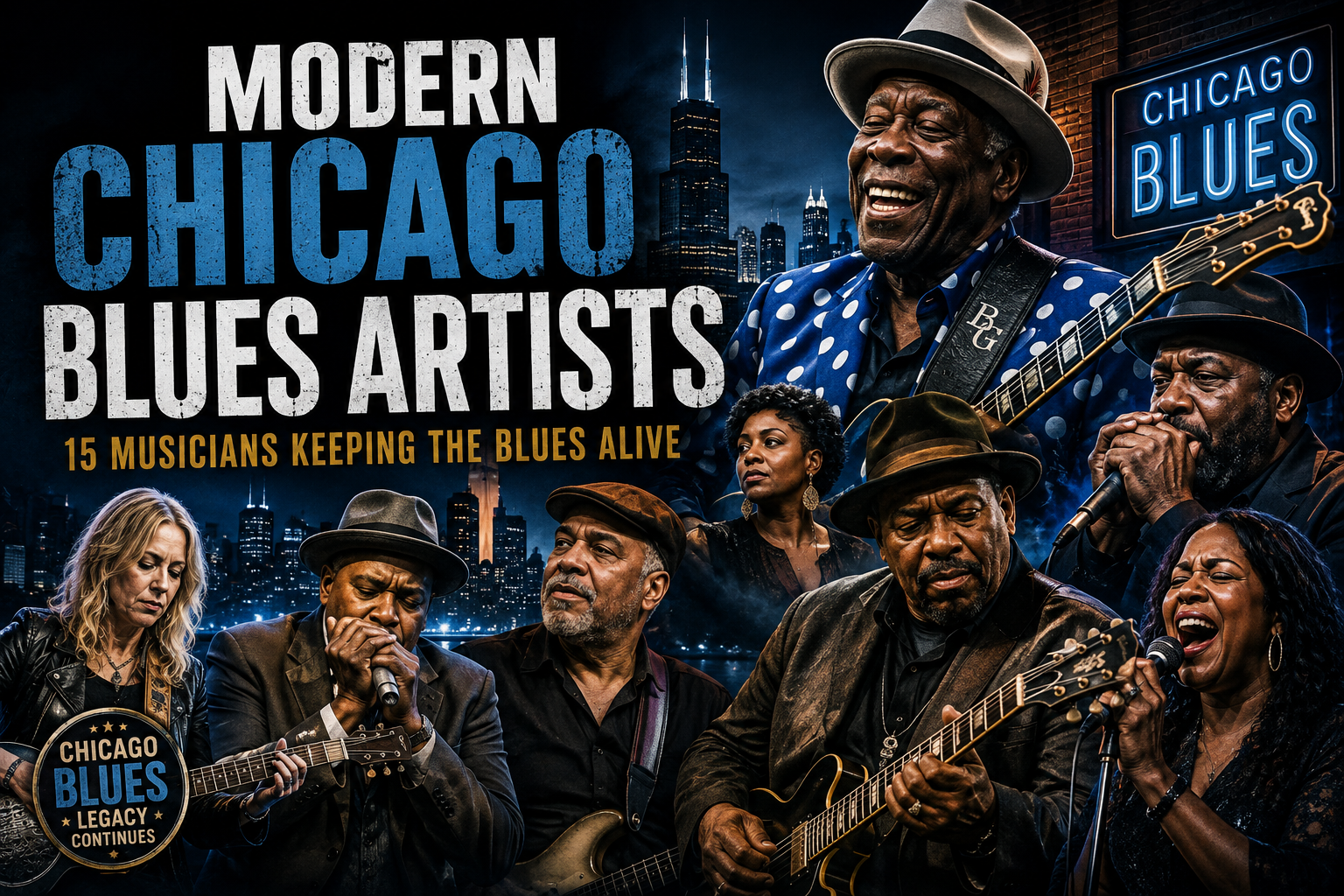
Modern Chicago Blues Artists 15 Musicians Keeping Blues Alive