
bluesmusica.com/: Blues music is more than a genre. It is one of the foundations of modern American popular music, a tradition built around storytelling, rhythm, improvisation and emotional expression.
From the rural American South to Chicago’s electric clubs and the fiery guitar traditions of Texas, blues has continually evolved while retaining a musical identity listeners can recognize almost immediately.
Today, blues exists in many forms: Delta Blues, Chicago Blues, Texas Blues, Memphis Blues, Hill Country Blues, Jump Blues, Blues Rock and numerous other regional and modern styles.
Smithsonian describes blues as both an influential American musical style and a living tradition with multiple regional styles.
But where did blues music come from, who shaped it, and why does blues guitar continue to influence musicians more than a century later?
What Is Blues Music?
Blues is an African American musical tradition that developed in the United States.
Its early history is complex and not perfectly documented, but blues emerged from musical traditions in the American South, drawing from work songs, spirituals, field hollers and other African American musical practices.
Historical references to blues began appearing by the late nineteenth century, while published compositions and commercial recordings helped spread the music to wider audiences during the early twentieth century.
One of blues music’s greatest strengths is simplicity.
A blues performance does not necessarily require a huge arrangement.
Sometimes a voice and guitar are enough.
But within that seemingly simple structure, musicians can create extraordinary emotional variation through rhythm, timing, blue notes, bends, vibrato, dynamics and improvisation.
Where Did the Blues Begin?
The American South played a central role in the early development of blues.
Mississippi, Texas, Louisiana, Georgia, Tennessee and other Southern regions all contributed to the emergence and evolution of the music.
Early rural musicians frequently performed with instruments such as acoustic guitar, harmonica and piano.
The Mississippi Delta became especially important to blues mythology and history.
Musicians developed raw, highly expressive approaches to singing and guitar playing that later influenced generations of electric blues and rock musicians.
But blues didn’t remain rural for long.
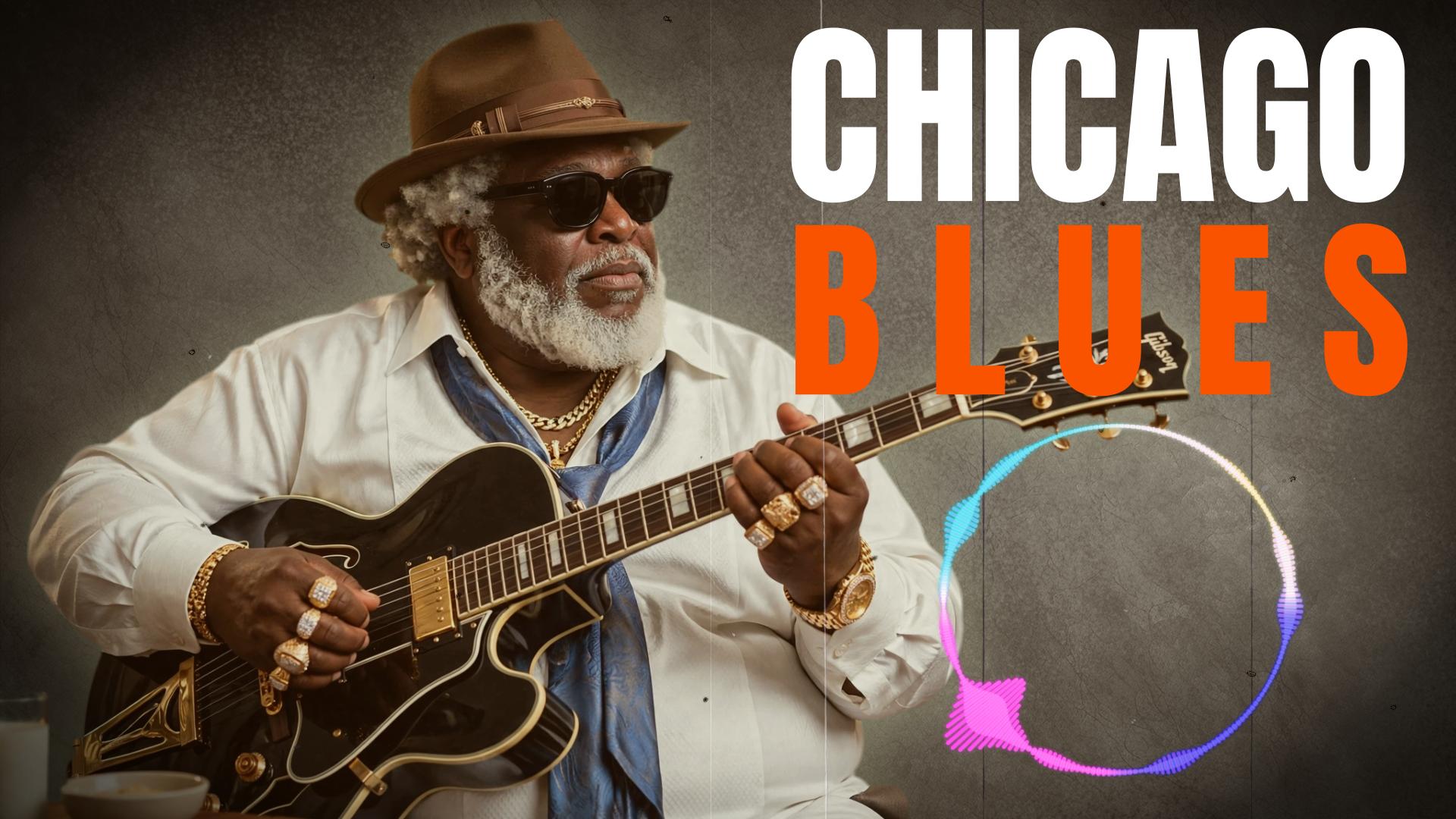
How Chicago Changed Blues Music
One of the most important transformations occurred when African Americans migrated from the South toward northern industrial cities during the twentieth century.
Chicago became a major destination.
The environment changed—and blues changed with it.
Acoustic instruments increasingly met amplification.
Electric guitar became louder.
Bass and drums created stronger rhythms.
Amplified harmonica added another powerful melodic voice.
Musicians including Muddy Waters became central to this increasingly electrified urban blues sound. The evolution of urban electric blues would also contribute to the development of rhythm and blues and rock and roll.
Chicago Blues demonstrated something that would become fundamental to the genre:
Blues could evolve without losing its identity.
The Rise of Blues Guitar
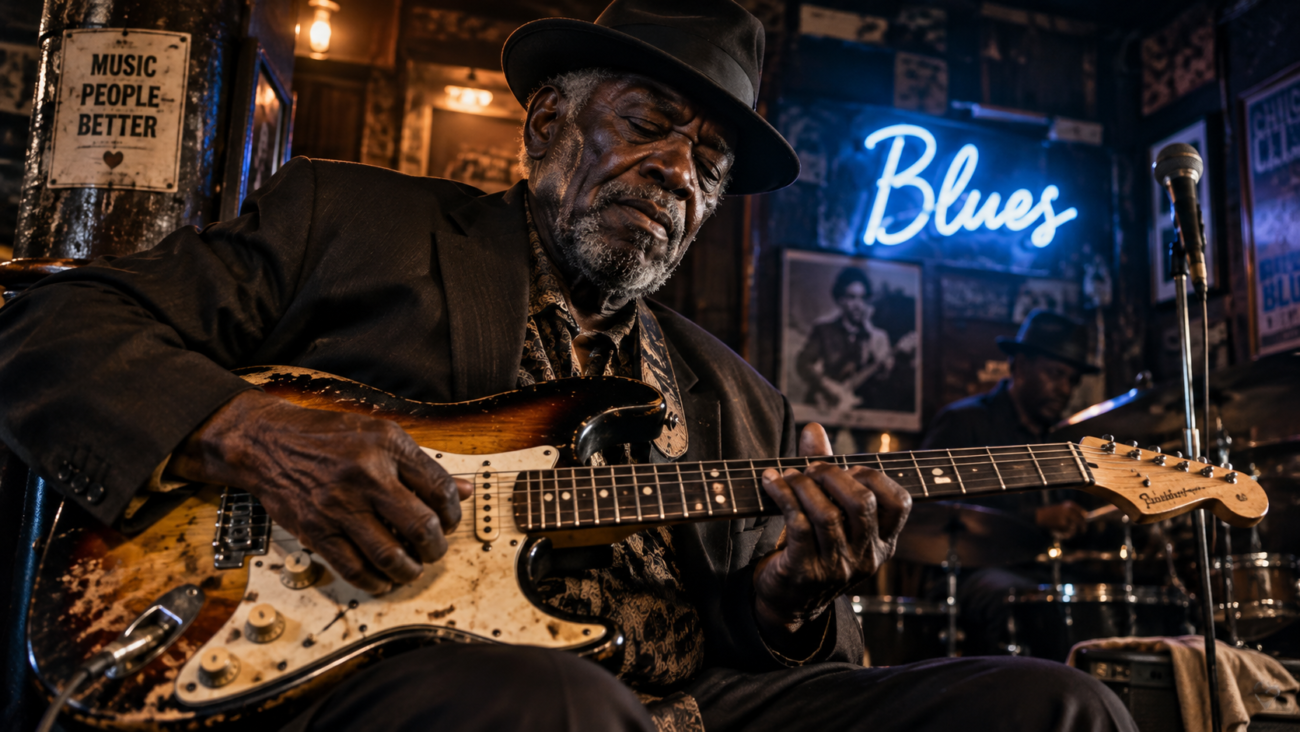
Few instruments are as closely associated with blues today as the guitar.
Blues guitarists learned how to make individual notes communicate emotion.
Instead of relying only on speed, blues guitar emphasizes phrasing.
A guitarist might bend one note and hold it.
Add vibrato.
Leave silence.
Then answer with another phrase.
This creates something resembling a conversation.
The guitar doesn’t simply accompany the song.
The guitar speaks.
Why Blues Guitar Sounds So Emotional
Several techniques contribute to the recognizable blues guitar sound.
String Bending
A guitarist physically bends a string to raise its pitch.
In blues, bending can create an almost vocal quality, allowing the guitar to cry, shout or sing.
Vibrato
Vibrato creates subtle pitch movement around a sustained note.
Every great blues guitarist develops a slightly different vibrato character.
Call and Response
A vocal line may be answered by guitar.
One guitar phrase may also be answered by another.
This conversational structure is deeply embedded in blues.
Blue Notes
Blues musicians frequently emphasize notes that create tension against conventional major or minor harmony.
Those notes contribute enormously to the emotional character listeners associate with blues.
Silence
Perhaps one of the most underrated blues techniques is knowing when not to play.
Space between phrases allows individual notes to carry more emotional weight.
Legendary Blues Artists
Blues history contains an extraordinary number of influential musicians.
Some became famous worldwide. Others remained relatively unknown outside dedicated blues audiences but still profoundly influenced later generations.
Important names include:
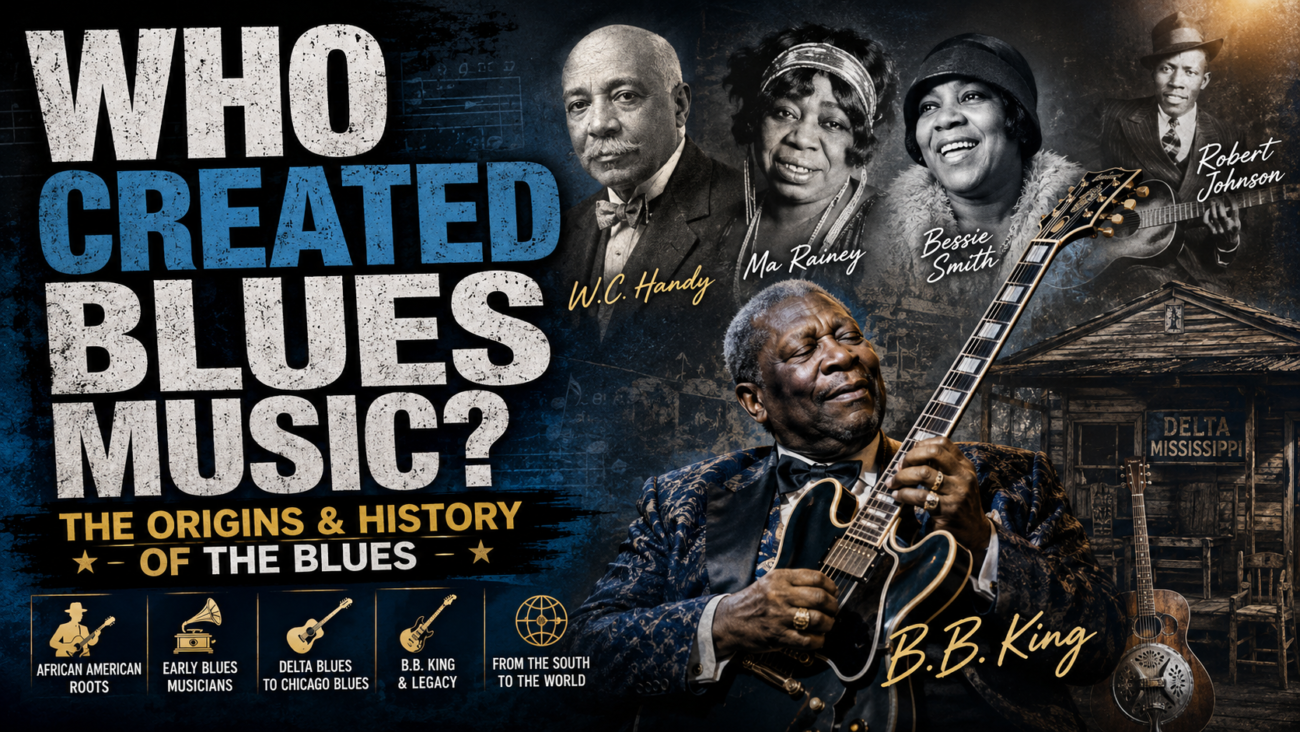
Robert Johnson — one of the most legendary figures associated with Delta Blues.
Muddy Waters — a central figure in the development and popularization of electric Chicago Blues.
Howlin’ Wolf — known for his commanding vocal presence and powerful Chicago sound.
B.B. King — famous for expressive lead guitar phrasing, string bending and unmistakable vibrato.
John Lee Hooker — known for hypnotic rhythmic approaches and boogie-based blues.
Buddy Guy — an explosive electric guitarist whose playing helped connect traditional blues with later blues-rock guitar.
Lightnin’ Hopkins — an enormously influential Texas blues guitarist and singer.
Smithsonian’s blues collections include artifacts, recordings and images associated with many major blues figures, including B.B. King, Muddy Waters, Buddy Guy, Lightnin’ Hopkins and others.
Blues Music Has Many Different Styles
One of the biggest misconceptions about blues is that every blues song sounds the same.
It doesn’t.
Regional traditions developed dramatically different rhythmic and instrumental characteristics.
Delta Blues
Raw and roots-oriented, often associated with acoustic guitar, slide playing and highly expressive performances.
Chicago Blues
Electric, amplified and urban, with guitar, harmonica, bass and drums playing major roles.
Texas Blues
A broad regional tradition that includes powerful guitar styles, shuffle rhythms and later electric blues approaches.
Memphis Blues
Closely connected to the rich musical culture of Memphis, where blues interacted with gospel, R&B and soul.
Hill Country Blues
Known for repetitive riffs, extended grooves and hypnotic rhythmic patterns.
Piedmont Blues
Recognizable for syncopated acoustic fingerpicking and alternating-thumb bass patterns.
Jump Blues
Faster, swinging and highly danceable.
British Blues
American blues profoundly influenced British musicians during the 1960s, contributing to increasingly amplified guitar-driven interpretations.
Blues Rock
The blues vocabulary became louder and heavier, helping shape generations of rock guitarists.
These differences show why blues should be understood as a family of musical traditions, rather than one rigid sound.
From Chicago Blues to Texas Blues
Want to actually hear how dramatically these blues styles can differ?
bluesmusica.com/ recently explored a musical journey beginning with Chicago Blues and traveling through Memphis, Swamp, Piedmont, Delta, Psychedelic, Jump, British, Country, Hill Country, West Coast, Acoustic and Blues Rock before reaching Texas Blues.
Read the full guide:
From Chicago Blues to Texas Blues
The journey demonstrates something fascinating: although guitar tone, tempo, rhythm and atmosphere change dramatically between regions, the underlying blues language remains recognizable.
How Blues Influenced Modern Music
The influence of blues reaches far beyond records labeled specifically as “blues.”
Rhythm and blues, rock and roll, blues rock and numerous later guitar-driven styles absorbed elements of blues harmony, phrasing, rhythm and performance.
Electric guitar culture in particular owes an enormous debt to blues musicians.
Bending, vibrato, pentatonic improvisation, call-and-response and expressive amplifier tones became fundamental parts of modern guitar vocabulary.
Many techniques rock listeners now consider normal were developed or popularized through generations of blues performance.
Blues Is Still Alive
Blues isn’t simply historical music preserved in archives.
Musicians continue writing and performing it.
Some remain deeply traditional.
Others combine blues with rock, soul, country, African musical traditions or modern production.
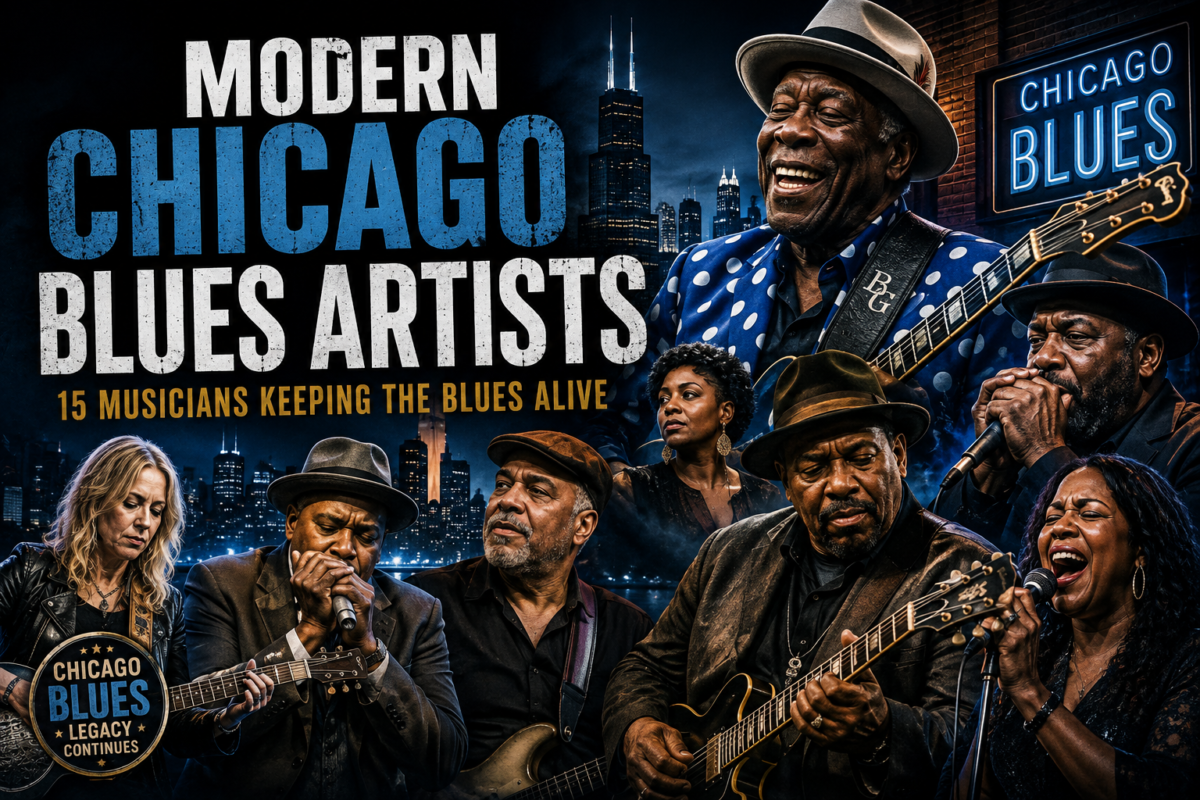
Independent musicians are also experimenting with new approaches while keeping blues guitar at the center.
That continuing evolution is exactly what makes blues a living tradition rather than a museum piece.
Listen to the Blues Journey
For listeners who want to compare several blues guitar styles in one continuous musical experience, DEBAGONG has created an original extended blues journey covering multiple traditions.
The collection moves through Chicago, Memphis, Swamp, Piedmont, Delta, Psychedelic, Jump, British, Country, Hill Country, West Coast, Acoustic, Blues Rock, Texas and finally DEBAGONG Blues.
Listen to the DEBAGONG Blues Journey
It is designed as a long-form blues guitar listening experience that can also accompany working, studying, reading, relaxing or night driving.
A New Chapter: DEBAGONG Blues
The final section of the journey introduces DEBAGONG’s developing signature sound.
One characteristic is particularly important:
Human Whistling.
Instead of treating human whistling as a brief background effect, DEBAGONG uses it as a recurring melodic voice capable of interacting with blues guitar.
The guitar plays a phrase.
The whistle responds.
Then the guitar answers again.
DEBAGONG describes this approach as Blues With Human Whistling.
It is not a claim that human whistling itself is new to blues history. Instead, the objective is to make the interaction between blues guitar and human whistling a recognizable part of DEBAGONG’s musical identity.
Why Blues Still Matters
Blues has survived because it can change.
It moved from rural communities to cities.
Acoustic guitars became electric.
Regional traditions developed different grooves.
British musicians reinterpreted American blues.
Blues helped influence rock.
New generations continue discovering the same musical vocabulary and finding different ways to express it.
The technology changes.
The guitar tones change.
The musicians change.
But the central idea remains remarkably powerful:
Turn human emotion into music.
Final Thoughts
Understanding blues music means understanding more than one genre label.
It means exploring history, migration, regional culture, legendary musicians, guitar techniques and generations of musical experimentation.
From Delta acoustic guitar to Chicago electricity and Texas guitar fire, every branch tells another part of the story.
And that story isn’t finished.
Blues remains alive whenever another musician bends a string, finds a groove and discovers a new way to tell an old human story.
External historical reference: Smithsonian — Blues Music: Iconic Instruments, Images, and Sounds
Internal article: From Chicago Blues to Texas Blues
DEBAGONG: Listen to the Blues Journey

Blues Music: History, Artists, Songs and Guitar