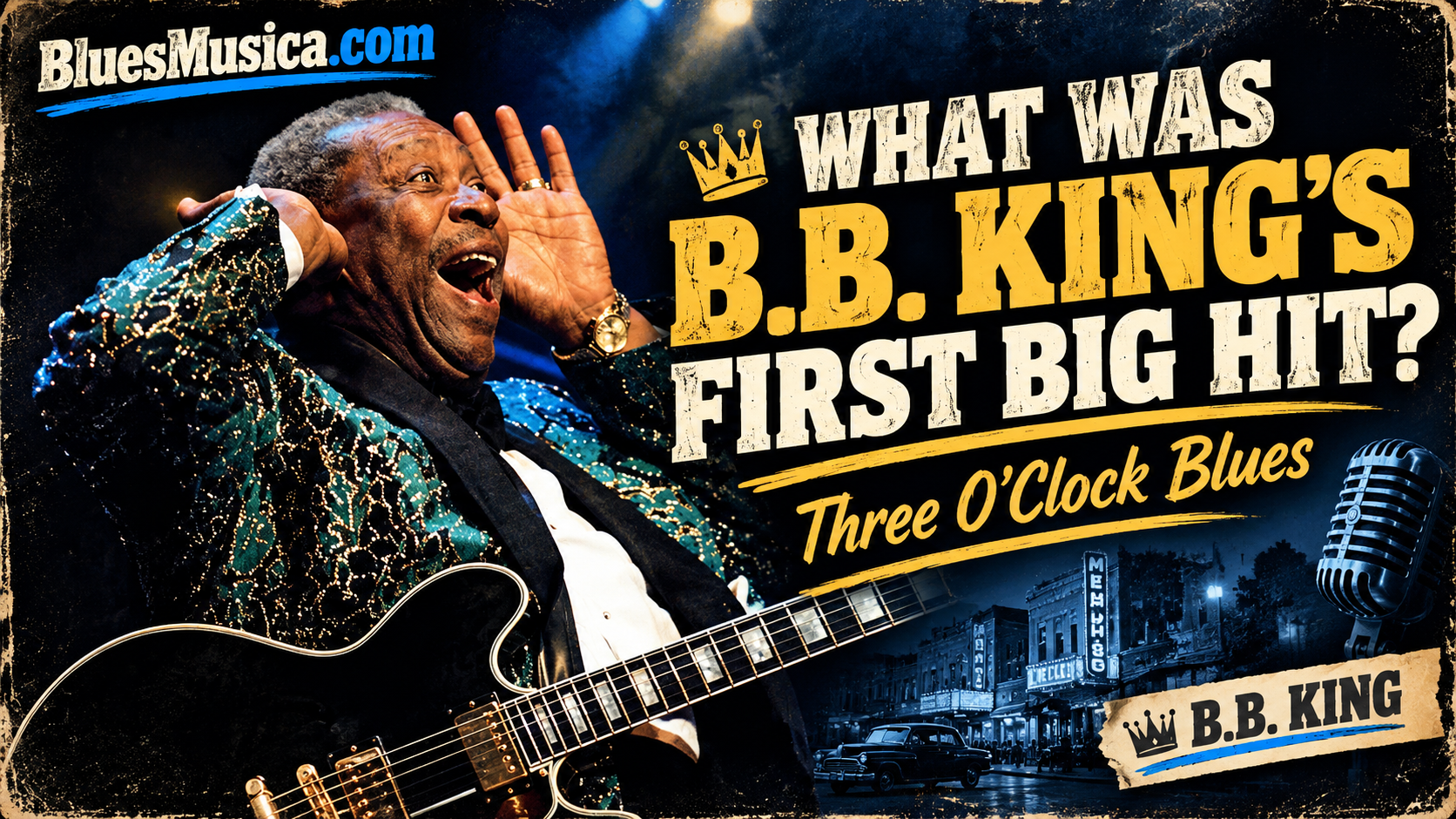

BluesMusica.com: What was B.B. King’s first big hit? The answer is “Three O’Clock Blues,” a powerful blues recording that helped transform Riley B. King from a hardworking regional performer into a nationally recognized blues star. Released in 1951, the record reached No. 1 on the Billboard R&B chart in early 1952 and became a major turning point in his career.
Before this breakthrough, King was building his reputation through radio work, club performances, and long nights on the road. “Three O’Clock Blues” changed the possibilities in front of him. It brought his music to a wider audience, opened doors to national touring, and helped establish the expressive guitar style that would eventually make him known around the world as the King of the Blues.
What Was B.B. King’s First Big Hit?
B.B. King’s first major hit was “Three O’Clock Blues.” He recorded his version of the song in the early 1950s, drawing on a blues composition previously recorded by Lowell Fulson.
The recording was released as a single in 1951. By early 1952, it had reached the top of the Billboard R&B chart, giving King his first major chart success. The song established him as a rising star and helped launch the next stage of his professional career.
According to the National Endowment for the Arts, King’s version topped the R&B charts for 15 weeks. His official biography describes the record as a breakthrough that firmly established him as a new star in blues music.
The achievement was especially significant because King had spent years working to make a living from music. A successful record meant more than recognition: it brought stronger booking opportunities and the chance to build a more sustainable touring operation.
1. The Story Behind “Three O’Clock Blues”
“Three O’Clock Blues” captures a familiar blues feeling: being awake in the middle of the night, unable to sleep because of heartbreak and loneliness. Its emotional premise was simple, but that simplicity gave the performer room to communicate the song’s pain through voice and guitar.
The song had already been recorded by Lowell Fulson. King’s version brought the material to a new audience through his own vocal delivery and expressive electric guitar playing.
Rather than overwhelming the listener with elaborate musical arrangements, King allowed the melody and emotional atmosphere to lead. His guitar phrases helped extend the feeling of the vocal, making the instrument sound almost like another singer responding to the story.
This balance between singing and guitar would remain an essential feature of King’s musical identity throughout his career.
2. How the Hit Changed B.B. King’s Career
Before “Three O’Clock Blues” became a hit, King was still working hard to establish himself. He performed regularly, developed his reputation through radio, and traveled to reach audiences wherever he could find them.
The success of the record changed his professional prospects. In an interview with NPR’s Fresh Air, King recalled that before the hit, he earned a modest living from radio and took on other work to make ends meet. After the record became successful, he began receiving much better guarantees for performances.
That additional income helped him hire more people, pay his band better, and reduce the burden of driving long distances himself. The hit also helped turn his growing regional following into a wider national audience.
For King, the record was not simply a chart achievement. It was a turning point that made a full-time music career more realistic.
3. Memphis Was Central to His Breakthrough
Memphis, Tennessee, played a crucial role in B.B. King’s development. The city was a major center for blues, gospel, and rhythm and blues, with radio stations, clubs, record companies, and musicians creating opportunities for performers to reach larger audiences.
King worked as a radio personality in Memphis, where listeners increasingly became familiar with his music and name. His nickname evolved from “Beale Street Blues Boy” to “Blues Boy King” and eventually B.B. King.
His connections in Memphis helped bring him to the attention of record producers. The success of “Three O’Clock Blues” then helped move his career beyond local radio and club appearances.
Memphis was therefore more than a geographical stop in his story. It was a place where King’s identity as a recording artist and entertainer began to take shape.
Read more about this journey in our related article: How Did B.B. King Become Famous?
4. Why the Song Connected With Listeners
Blues has always been a powerful way to express personal experiences through music. “Three O’Clock Blues” centers on loneliness and emotional frustration, feelings that listeners can understand regardless of their background.
King’s voice brought a sense of vulnerability to the song. His guitar added another layer of expression, using sustained notes, bends, and carefully shaped phrases to deepen the mood.
That combination helped the performance feel personal rather than mechanical. The vocal told the story, while the guitar emphasized its emotional details.
The recording also demonstrated a key strength of King’s approach: he could make a song memorable without relying on technical excess. His phrasing and timing gave the music room to breathe, allowing listeners to focus on the feeling behind each line.
5. The Hit Opened the Door to National Touring
The success of “Three O’Clock Blues” helped King reach audiences far beyond Memphis and the surrounding region. His growing popularity led to national touring opportunities, including appearances at major theaters that served African American audiences during the era of segregation.
These tours were important for more than exposure. They allowed King to refine his stagecraft, build a dependable band, and develop a lasting relationship with audiences across the country.
King became known for his relentless touring schedule. His live performances helped turn listeners who discovered him through records or radio into dedicated fans who returned to see him on stage.
Over time, his reputation grew through a combination of recordings, touring, and his unmistakable guitar style. “Three O’Clock Blues” was one of the early records that made this long career possible.
6. Was “Three O’Clock Blues” the Same as “The Thrill Is Gone”?
No. Both recordings are important milestones in B.B. King’s career, but they represent different stages of his success.
“Three O’Clock Blues” was his first major chart breakthrough in the early 1950s. It established him as a rising R&B and blues star and helped launch his national career.
“The Thrill Is Gone,” released in King’s version in 1969, became his best-known crossover hit. Its sophisticated arrangement and haunting guitar sound brought him to a broader audience and helped introduce his music to listeners outside the traditional blues market.
The two songs illustrate different aspects of his legacy. “Three O’Clock Blues” opened an important door, while “The Thrill Is Gone” helped make him an internationally recognized figure in modern blues.
Explore our related article: Why Is “The Thrill Is Gone” So Famous?
7. The Beginning of a Blues Legend
After the success of “Three O’Clock Blues,” King continued releasing records that strengthened his position in the blues and R&B world. Songs such as “You Know I Love You,” “Woke Up This Morning,” “Please Love Me,” and “You Upset Me Baby” helped establish a consistent presence on the charts during the 1950s.
As his career developed, his sound became increasingly recognizable. His controlled vibrato, expressive string bends, melodic solos, and clear electric guitar tone gave him a musical identity that was difficult to mistake for anyone else’s.
His famous guitar, Lucille, became closely associated with that sound. Yet the instrument was only one part of his artistry. King’s touch, timing, voice, and ability to connect with an audience were just as important.
Learn more about his instrument in What Guitar Did B.B. King Play? and explore his playing techniques in What Made B.B. King’s Guitar Style Unique?
Listen to the Music That Made History
To understand why B.B. King’s first hit mattered, listen closely to the relationship between his voice and guitar. Notice how the instrument answers the vocal, how individual notes are allowed to ring, and how emotion takes priority over speed.
“Three O’Clock Blues” was the beginning of a remarkable journey, but it was only one chapter in a career filled with classic recordings, unforgettable performances, and a lasting influence on guitarists across generations.
Frequently Asked Questions
What was B.B. King’s first big hit?
His first major hit was “Three O’Clock Blues.” Released in 1951, it reached No. 1 on the Billboard R&B chart in early 1952.
Who originally recorded “Three O’Clock Blues”?
Lowell Fulson recorded an earlier version of the song. B.B. King’s version became a major hit and helped establish his national reputation.
How long did “Three O’Clock Blues” stay at No. 1?
Sources differ on the chart duration they report. The National Endowment for the Arts states that the record topped the R&B chart for 15 weeks, while B.B. King’s official biography describes a five-week run at No. 1. The key milestone is that the song became his first major chart-topping hit.
How did “Three O’Clock Blues” change B.B. King’s life?
The hit improved his earning potential, helped him secure better performance bookings, and supported the growth of his touring band. It also expanded his audience beyond his earlier regional following.
Was “The Thrill Is Gone” B.B. King’s first hit?
No. “Three O’Clock Blues” was his first major hit in the early 1950s. “The Thrill Is Gone” became a major crossover success in 1969 and 1970.
Final Thoughts
“Three O’Clock Blues” was the record that helped change B.B. King’s future. Its chart success brought new opportunities, strengthened his professional career, and introduced more listeners to a musician whose guitar could communicate emotion with extraordinary clarity.
His later achievements would make him one of the most celebrated figures in blues history, but the journey toward that legacy included years of hard work, radio performances, and constant travel. The success of “Three O’Clock Blues” marked the moment when that effort began reaching a much larger audience.
Explore more legendary blues songs, musicians, and stories at BluesMusica.com.
What Was B.B. King’s First Big Hit