
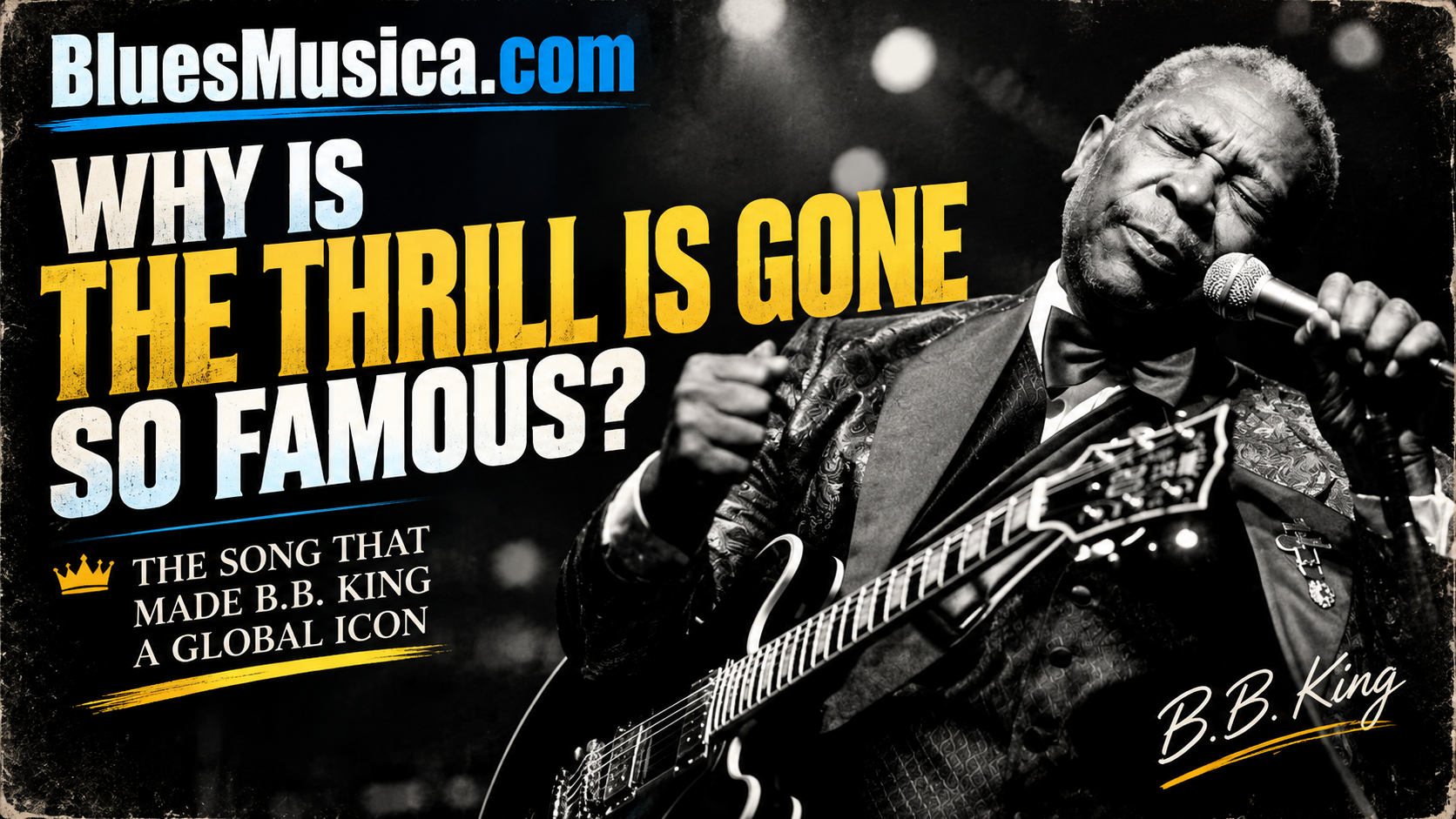

BluesMusica.com: Why is The Thrill Is Gone so famous? For millions of blues fans, the song represents the sound of heartbreak itself. With B.B. King’s emotional voice, expressive guitar playing, and haunting arrangement, the recording became one of the most recognizable blues performances in modern music history.
Released in 1969, B.B. King’s version transformed a song originally recorded decades earlier into a landmark recording. Its success helped introduce King’s music to a broader mainstream audience and strengthened his reputation as one of the greatest blues artists of all time.
What Is The Thrill Is Gone About?
The Thrill Is Gone is a song about the end of a relationship and the emotional emptiness that follows. Its narrator recognizes that the love and excitement once shared by two people have disappeared.
The lyrics are direct, but the feeling behind them is complicated. There is sadness, resignation, and a sense that the relationship cannot return to what it once was.
B.B. King’s performance makes those emotions feel personal. His voice communicates the pain of letting go, while his guitar answers the vocal lines with phrases that seem to express what words cannot.
Who Originally Recorded The Thrill Is Gone?
B.B. King did not write the song. The Thrill Is Gone was written by Roy Hawkins and Rick Darnell, and Hawkins recorded an earlier version in 1951.
King’s famous recording came later, giving the song a different musical identity through its arrangement, vocal delivery, and distinctive electric guitar sound.
This is an important part of blues history: songs often evolve as different musicians reinterpret them. A later performance can become the definitive version for generations of listeners, even when the song itself was written and recorded earlier.
Why Did B.B. King’s Version Become So Popular?
Several elements helped make King’s version stand out.
- Emotional vocals: King sounds controlled but deeply affected by the song’s heartbreak.
- Expressive guitar: His bends and vibrato give the instrumental phrases a vocal quality.
- Memorable arrangement: The recording combines blues feeling with a polished, dramatic sound.
- Space and restraint: King allows phrases to breathe instead of filling every moment with notes.
- Universal subject: The end of love is an experience listeners can understand across generations.
The result is a performance that feels intimate while still sounding powerful enough for a large stage.
The Guitar Sound That Defines the Recording
One of the most recognizable features of The Thrill Is Gone is B.B. King’s guitar tone.
King does not need to play constantly to hold the listener’s attention. He uses sustained notes, carefully controlled bends, and his signature vibrato to create tension and release.
His guitar lines often respond to the vocal melody. This call-and-response relationship makes Lucille feel like another voice in the song.
For aspiring guitarists, the recording is a masterclass in phrasing. It demonstrates how tone, timing, dynamics, and silence can be just as important as speed.
Learn more about the instrument associated with his signature sound in our article What Guitar Did B.B. King Play?.
How The Thrill Is Gone Crossed Into the Mainstream
King had already spent years building a reputation through radio, recordings, and relentless touring. However, The Thrill Is Gone helped bring his music to listeners beyond the traditional blues audience.
The recording reached No. 15 on the Billboard Hot 100 in 1970, giving King a major mainstream success. It also won the Grammy Award for Best R&B Vocal Performance, Male, at the 1971 Grammy Awards.
The achievement showed that blues could reach a wide commercial audience without losing its emotional identity.
Why the Song Still Matters Today
More than half a century after its release, The Thrill Is Gone remains an essential B.B. King recording because its central emotion never becomes outdated.
Its influence can be heard in the way blues musicians approach guitar solos, vocal phrasing, and dramatic arrangements. The song also remains a popular introduction to King’s music for listeners discovering him for the first time.
Its lasting power comes from the balance between simplicity and expression. The arrangement supports the song without overwhelming it, and King’s guitar gives the performance a signature identity.
Listen to B.B. King Perform
Pay attention to the way King shapes each phrase. His vibrato, bends, and pauses demonstrate why his guitar playing became so influential.
Frequently Asked Questions
When did B.B. King release The Thrill Is Gone?
B.B. King’s well-known recording was released in 1969 and became a major mainstream hit in 1970.
Did B.B. King write The Thrill Is Gone?
No. The song was written by Roy Hawkins and Rick Darnell. B.B. King recorded the version that became widely famous.
How successful was The Thrill Is Gone?
The recording reached No. 15 on the Billboard Hot 100 in 1970 and won a Grammy Award for Best R&B Vocal Performance, Male, in 1971.
Why is the guitar playing so memorable?
King combines expressive bends, controlled vibrato, carefully timed phrases, and space between notes. His guitar complements the vocal rather than competing with it.
Is The Thrill Is Gone considered a blues classic?
Yes. It is widely regarded as one of B.B. King’s signature recordings and an important example of electric blues reaching a mainstream audience.
Conclusion
The Thrill Is Gone became famous because B.B. King transformed a powerful heartbreak song into an unforgettable musical performance. His voice, guitar tone, expressive phrasing, and restrained arrangement created a recording that connected with listeners far beyond the blues community.
The song remains a defining example of King’s artistry: emotional, unmistakable, and built on the belief that a single well-played note can say more than a hundred ordinary ones.
Explore more B.B. King stories on BluesMusica.com:
- 10 B.B. King Songs You Should Know
- How Did B.B. King Become Famous?
- How Did B.B. King Influence Guitar Players?
- Why Did B.B. King Name His Guitar Lucille?
Why Is The Thrill Is Gone So Famous