
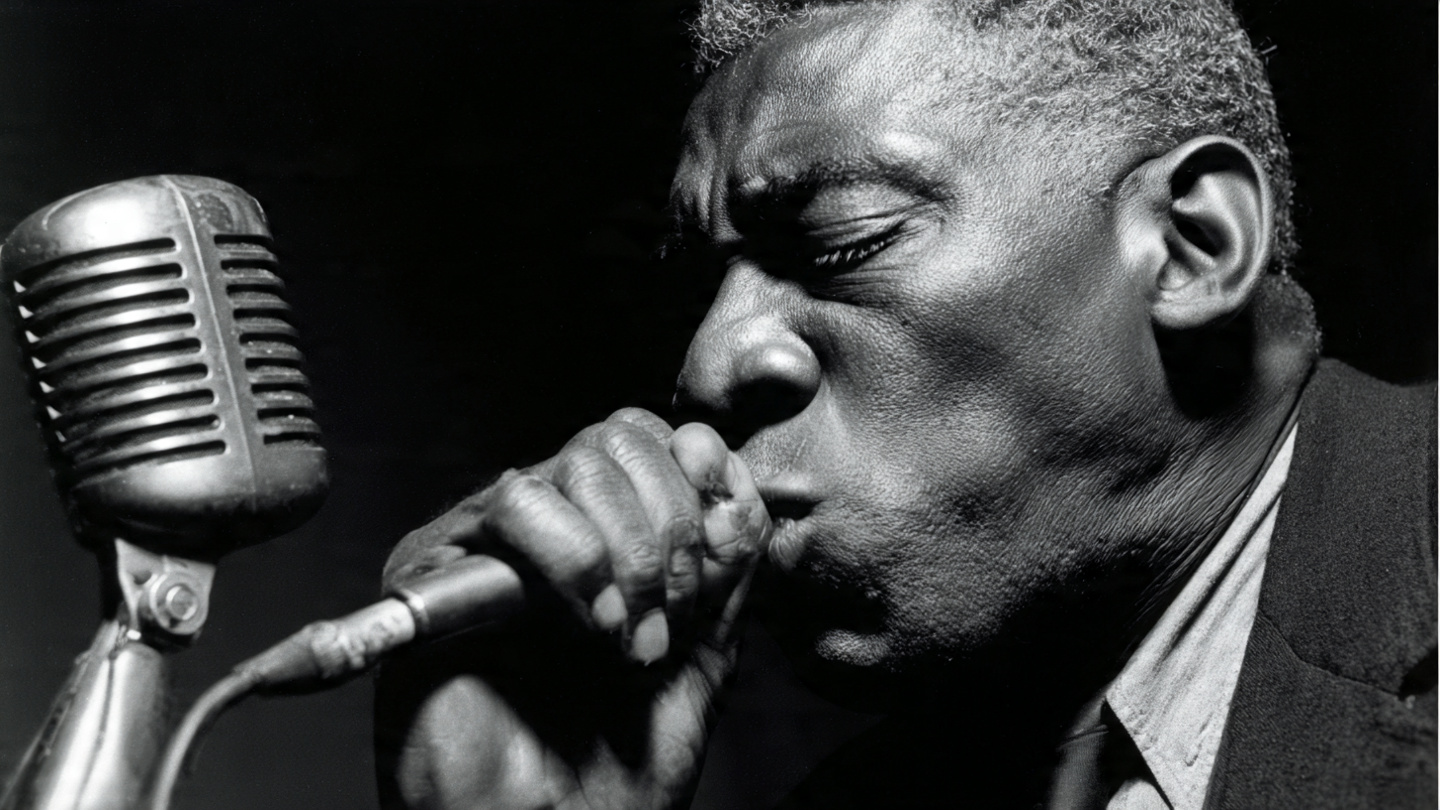

Howlin’ Wolf stands as one of the most powerful and unmistakable figures in blues history. With a voice that sounded like thunder and a stage presence that felt primal and commanding, he helped define electric blues and set the standard for emotional intensity in modern music. Few artists have ever sounded as raw, authentic, or unforgettable.
Born Chester Arthur Burnett on June 10, 1910, in White Station, Mississippi, Howlin’ Wolf grew up in the heart of the Delta. His early life was marked by hardship, physical labor, and exposure to the deep traditions of Southern blues. These experiences shaped both his voice and his worldview, giving his music an unmatched sense of honesty and force.
Early Life in the Mississippi Delta
As a young man, Howlin’ Wolf learned guitar and harmonica from local musicians and from traveling bluesmen who passed through the Delta. He was heavily influenced by Charley Patton, whose commanding performance style and rhythmic drive left a lasting impression.
Wolf’s early performances reflected the rural blues tradition, where music served as storytelling, emotional release, and communal expression. Like many early blues artists, he relied on simple instruments and direct emotional delivery to connect with listeners. For more context on the tools that shaped early blues, see this related article:
👉 https://bluesmusica.com/what-instrument-would-rural-blues-musicians-most-often-use/
From the Delta to Chicago
Howlin’ Wolf’s career changed dramatically when he moved north during the Great Migration. Chicago offered new opportunities, larger audiences, and louder venues. To match the city’s energy, Wolf embraced electric amplification, transforming his Delta roots into a bold urban sound.
In Chicago, he assembled a powerful band that emphasized strong rhythms, driving harmonica lines, and electrified guitar. His music retained the emotional weight of Delta blues while gaining the volume and force needed to dominate noisy clubs.
Unlike many performers, Howlin’ Wolf’s physical presence became part of the music. His towering frame, intense facial expressions, and uninhibited movements turned every performance into a visceral experience.
Chess Records and Timeless Songs
Howlin’ Wolf became one of the most important artists on Chess Records, recording a series of blues classics that remain essential listening. Songs such as Smokestack Lightning, Spoonful, Killing Floor, and Back Door Man defined the Chicago blues sound.
These recordings combined primal emotion with modern production, influencing not only blues musicians but also the emerging rock generation. Wolf’s voice carried authority, danger, and vulnerability all at once, making his music deeply compelling.
His collaborations with legendary songwriter Willie Dixon further strengthened his catalog, producing songs that would later be covered by countless rock and blues artists.
Influence on Rock and Modern Music
Howlin’ Wolf’s influence extends far beyond the blues world. British rock bands in the 1960s drew heavily from his music, with artists such as The Rolling Stones, Led Zeppelin, and Cream reinterpreting his songs for new audiences.
His aggressive vocal delivery and minimalist arrangements helped shape the foundations of blues rock. For a broader look at how blues influenced modern genres, explore this internal resource:
👉 https://bluesmusica.com/blues-influences-in-contemporary-rock-music/
Wolf demonstrated that emotion and authenticity mattered more than technical perfection, a lesson that continues to resonate with musicians today.
Character, Integrity, and Legacy
Beyond his music, Howlin’ Wolf was known for his strong sense of integrity. Unlike many artists of his era, he insisted on fair treatment for his band members and maintained a disciplined approach to his career. He was respected not only for his talent but also for his character.
Cultural historians and institutions have recognized Howlin’ Wolf as a foundational figure in American music history. His contributions to preserving and advancing blues music are documented by organizations such as the Smithsonian National Museum of African American History and Culture:
👉 https://nmaahc.si.edu/
Howlin’ Wolf passed away on January 10, 1976, but his music remains as powerful today as it was during his lifetime.
Why Howlin’ Wolf Still Matters
Howlin’ Wolf represents the raw core of the blues. His music reminds listeners that blues is not about polish or perfection, but about truth, emotion, and survival. His voice continues to echo through modern blues, rock, and soul music, influencing artists who seek authenticity over spectacle.
In the story of electric blues, Howlin’ Wolf is not just a chapter — he is a cornerstone.
🎥 Blues Live Performance
Experience the living spirit of blues music through this live performance:


