
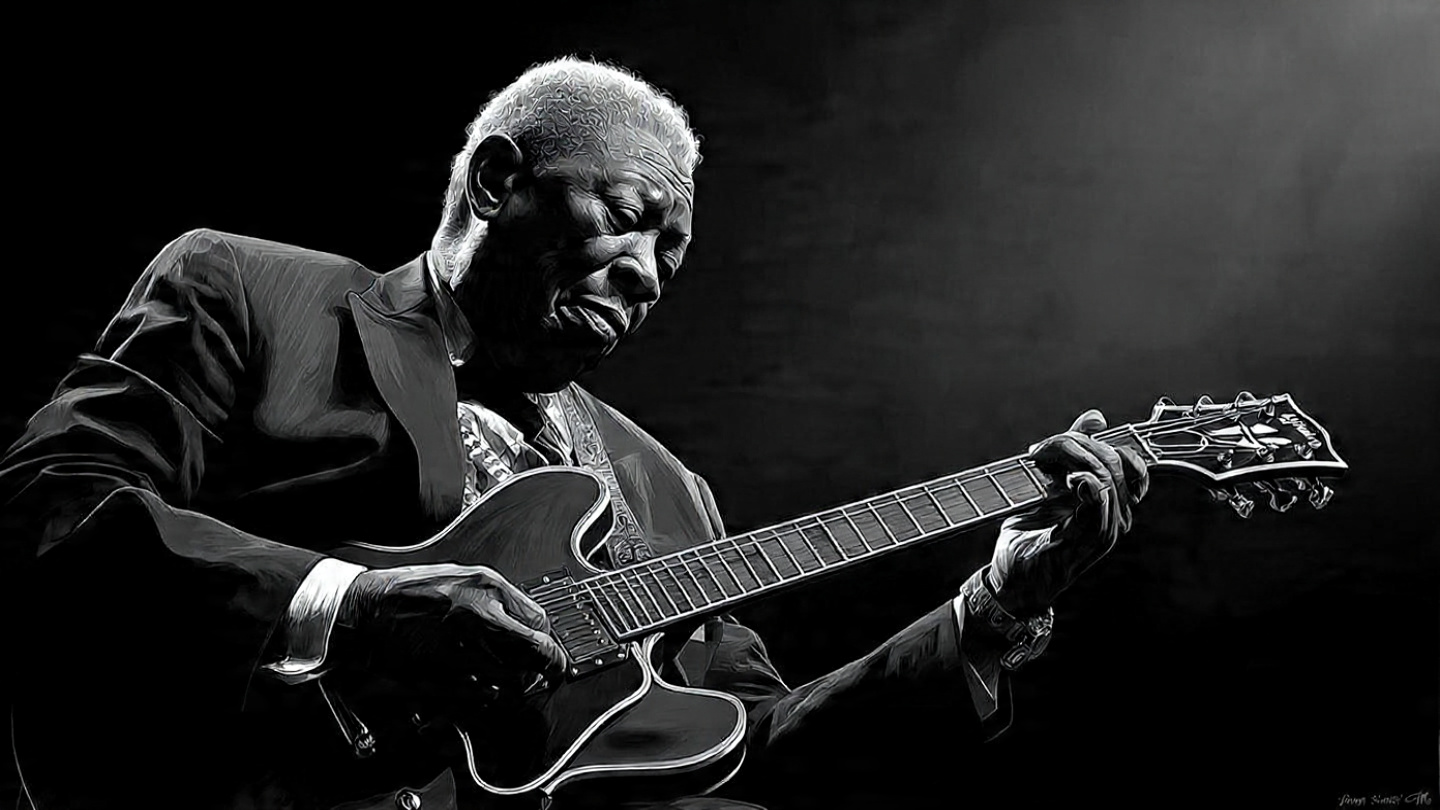
B.B. King: The Life and Legacy of the King of the Blues

B.B. King is widely recognized as the most influential blues guitarist of all time. Known as the “King of the Blues,” his unique guitar style, emotional phrasing, and expressive vibrato changed the sound of blues music forever. More than just a musician, B.B. King became a global ambassador for the blues, bringing a deeply rooted African-American musical tradition to audiences around the world.
Born as Riley B. King on September 16, 1925, in Berclair, Mississippi, his early life was shaped by poverty, hard labor, and the cultural environment of the American South. Like many rural blues musicians, he grew up surrounded by spirituals, work songs, and early country blues. These sounds formed the emotional foundation of his music long before he ever touched an electric guitar.
Early Life and Musical Beginnings
B.B. King’s childhood was marked by hardship. After losing his mother at a young age, he worked as a sharecropper and tractor driver while developing his passion for music. Gospel music played a crucial role in his early development, as he sang in church choirs and learned the importance of conveying emotion through sound.
His transition from gospel to blues came when he moved to Memphis, Tennessee, a city that would become central to his career. Memphis was a melting pot of musical styles, and it was there that King was exposed to electric blues, jazz, and rhythm and blues. This environment helped him refine a sound that was both traditional and modern.
The Birth of “Lucille” and a Signature Sound
One of the most iconic elements of B.B. King’s legacy is his guitar, famously named Lucille. The name originated from an incident in an Arkansas dance hall, where a fire broke out during a fight. King rushed back inside to save his guitar, later naming it Lucille as a reminder never to risk his life so recklessly again.
Musically, B.B. King developed a style that emphasized single-note solos, precise bends, and a wide vibrato rather than fast runs or complex chord progressions. This approach allowed him to make every note sing, cry, and speak directly to the listener. His phrasing influenced countless guitarists and became a defining characteristic of modern blues guitar.
For readers interested in the foundations of early blues instruments, you may also explore
👉 https://bluesmusica.com/what-instrument-would-rural-blues-musicians-most-often-use/
Rise to Fame and Commercial Success
During the 1950s and 1960s, B.B. King released a steady stream of successful recordings, touring relentlessly across the United States. Songs like Three O’Clock Blues, Every Day I Have the Blues, and later The Thrill Is Gone helped bridge the gap between traditional blues and mainstream audiences.
Unlike many blues musicians of his era, King achieved commercial success without compromising his musical identity. His ability to connect emotionally with audiences made his live performances legendary. Concertgoers often described his shows as intimate conversations between the artist and his listeners.
His influence extended beyond blues, shaping rock, soul, and even jazz musicians. Artists such as Eric Clapton, Stevie Ray Vaughan, and Buddy Guy have openly credited B.B. King as a primary inspiration.
Global Influence and Cultural Impact
B.B. King played a crucial role in introducing blues music to international audiences. Through extensive touring and collaborations, he helped establish blues as a respected global art form. His performances at major festivals and cultural events reinforced the idea that blues was not just entertainment, but a powerful form of storytelling and emotional expression.
Institutions such as the Smithsonian have documented the cultural importance of blues music and artists like B.B. King in preserving African-American history and musical heritage:
👉 https://nmaahc.si.edu/
His career demonstrated that blues music could evolve while remaining deeply connected to its roots.
Later Years and Enduring Legacy
Even into his later years, B.B. King continued to tour and record, maintaining an active presence well into his 80s. His longevity was rare in the music industry and reflected his deep commitment to the blues.
B.B. King passed away on May 14, 2015, but his influence remains stronger than ever. His recordings continue to educate new generations of musicians, while his approach to guitar playing serves as a masterclass in emotional restraint and musical storytelling.
Today, B.B. King is remembered not only for his technical skill, but for his humanity, humility, and unwavering dedication to the blues.
Why B.B. King Still Matters Today
B.B. King’s legacy proves that simplicity, when combined with honesty and emotion, can be timeless. In an era of fast techniques and digital production, his music reminds listeners that one perfectly placed note can say more than a thousand words.
His life story reflects the journey of blues music itself — from rural hardship to global recognition — and ensures that the blues will continue to live on for generations to come.
🎥 Blues Live Performance
To experience the living spirit of blues music, watch this live blues performance here:


