
Blues Music: Chicago Blues vs Delta Blues – 10 Key Differences

Chicago Blues vs Delta Blues: What’s the Difference?
bluesmusica.com/: If you’ve recently started exploring blues music, you’ve probably encountered two of the most influential styles in blues history: Chicago Blues and Delta Blues.
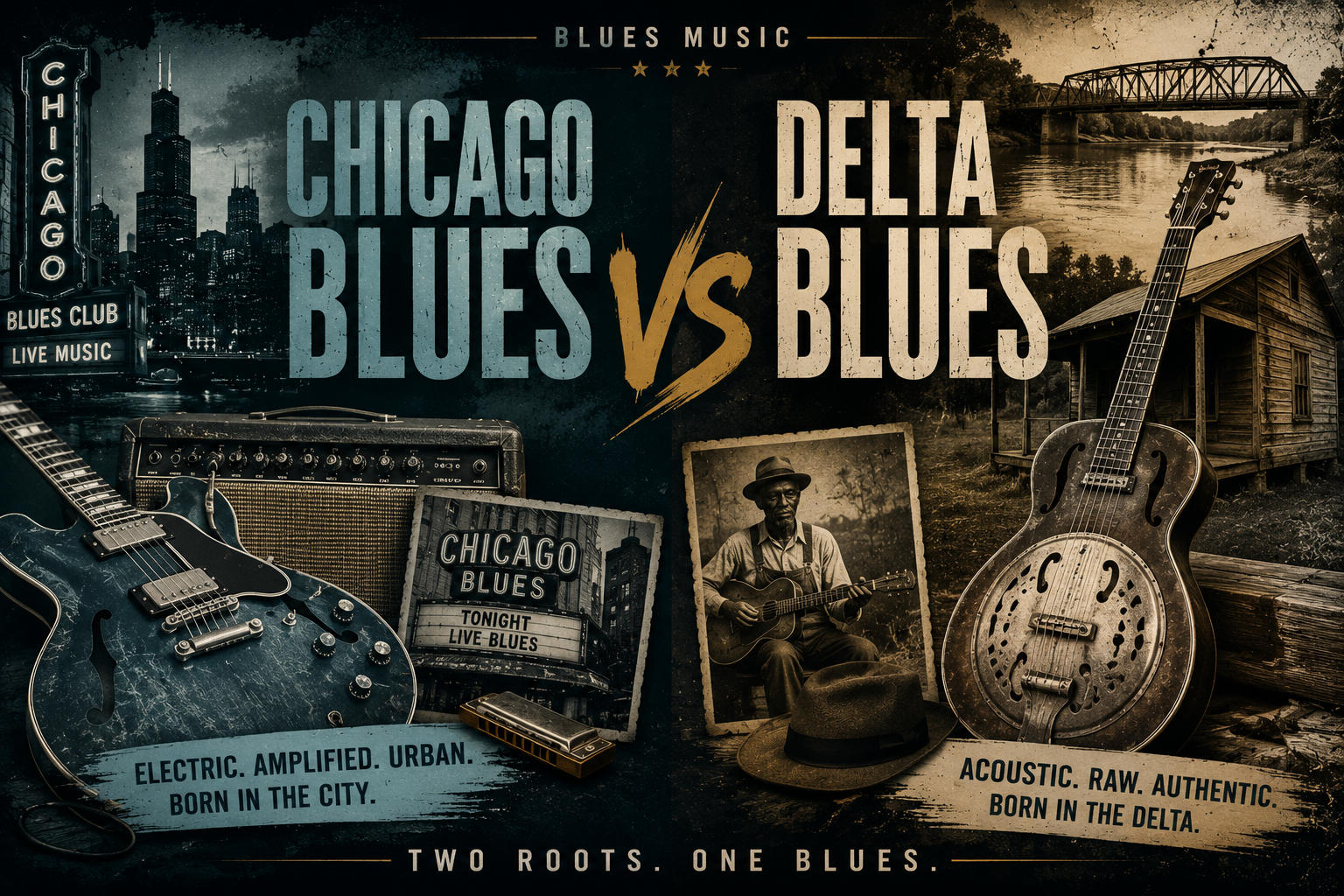
While both genres share the same roots, they sound remarkably different. One is raw and acoustic, born in the Mississippi Delta. The other is loud, electric, and shaped by the energy of Chicago’s clubs.
Understanding the differences between these two styles is the perfect way to appreciate how blues music evolved into the sound we know today.
The Birthplace of Delta Blues
Delta Blues originated in the Mississippi Delta during the early 1900s.
Musicians often performed alone using an acoustic guitar and their voice. Without amplifiers or full bands, every note had to carry emotion through simple yet expressive playing.
Many songs reflected daily struggles, hard work, faith, love, and survival.
The sound was intimate, personal, and deeply emotional.
The Rise of Chicago Blues
During the Great Migration, many Southern blues musicians moved north to Chicago in search of work and new opportunities.
The city’s busy nightlife required louder performances.
Acoustic guitars became electric.
Bands grew larger.
Drums, bass, piano, and amplified harmonica became common.
Chicago Blues was born.
Guitar Style
Delta Blues Guitar
Delta Blues guitar focuses on:
- Fingerpicking
- Slide guitar
- Open tunings
- Acoustic tone
- Simple rhythm
The guitar often accompanies the singer while maintaining a steady groove.
Chicago Blues Guitar
Chicago Blues guitar emphasizes:
- Electric guitar
- String bending
- Vibrato
- Shuffle rhythm
- Strong lead solos
- Amplified tone
The guitar becomes a powerful voice capable of carrying an entire performance.
Instrument Comparison
| Delta Blues | Chicago Blues |
|---|---|
| Acoustic Guitar | Electric Guitar |
| Solo Performance | Full Band |
| Slide Guitar | Lead Guitar |
| Minimal Percussion | Drums & Bass |
| Rural Sound | Urban Sound |
Rhythm and Groove
Delta Blues often feels slower and freer, allowing the performer to stretch phrases naturally.
Chicago Blues introduced tighter rhythms driven by bass and drums, creating the famous shuffle groove heard in countless blues recordings.
Sound
Delta Blues
- Raw
- Dry
- Acoustic
- Intimate
- Traditional
Chicago Blues
- Powerful
- Electric
- Full
- Dynamic
- Danceable
Which Style Came First?
Delta Blues came first.
Chicago Blues evolved later after musicians relocated to Chicago and adapted their music to city audiences.
Without Delta Blues, Chicago Blues would never have existed.
Which Style Is More Popular Today?
Both remain popular.
Delta Blues is respected for its authenticity and historical importance.
Chicago Blues is often more accessible to modern listeners because of its electric guitar, energetic rhythm, and full-band arrangements.
Many contemporary blues artists blend elements of both traditions.
Experience Modern Chicago Blues
If you enjoy expressive guitar and original instrumental blues inspired by the Chicago tradition, explore DEBAGONG’s latest blues performances.
🎸 Watch on YouTube
Continue Reading
Learn more:
👉 https://bluesmusica.com/what-is-chicago-blues-music/
👉 https://bluesmusica.com/history-of-chicago-blues-music/
👉 https://bluesmusica.com/blues-music-from-chicago-blues-to-texas-blues/
Final Thoughts
Delta Blues and Chicago Blues represent two chapters of the same musical story.
One tells the story of the rural South through acoustic simplicity.
The other transformed those traditions into an electrifying urban sound that changed music forever.
Together, they remain the foundation of modern blues.
External Reference
For more information about blues history, visit the Blues Foundation.