
bluesmusica.com/: What are the best blues songs of all time?
It sounds like a simple question until you begin exploring more than a century of blues history.
From the raw acoustic recordings associated with the Mississippi Delta to electric Chicago Blues, Texas guitar fire and Blues Rock, generations of musicians have transformed the blues while keeping its emotional core alive.
Some songs became standards. Others changed guitar playing forever. And a handful became recordings that even people who don’t consider themselves blues fans immediately recognize.
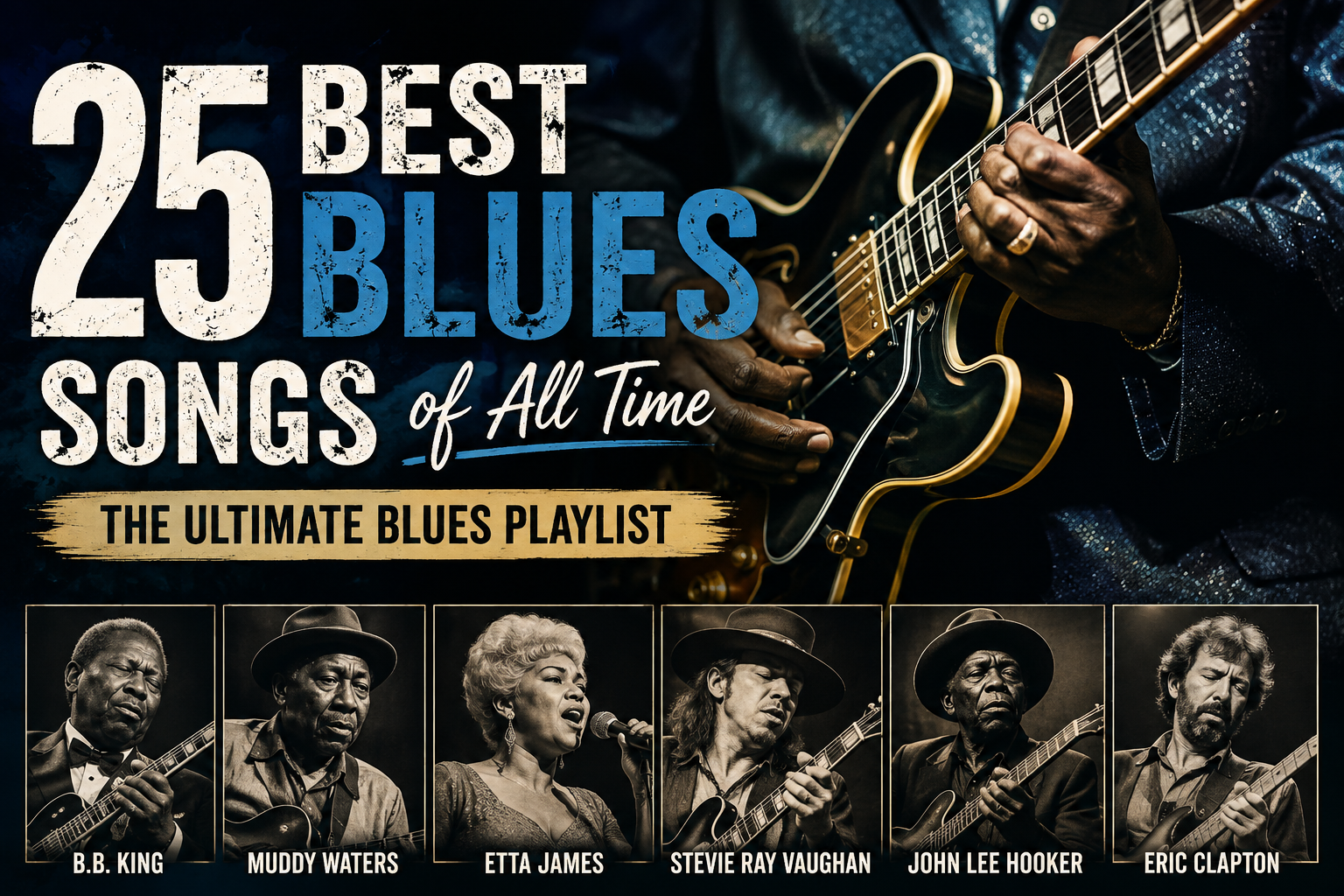
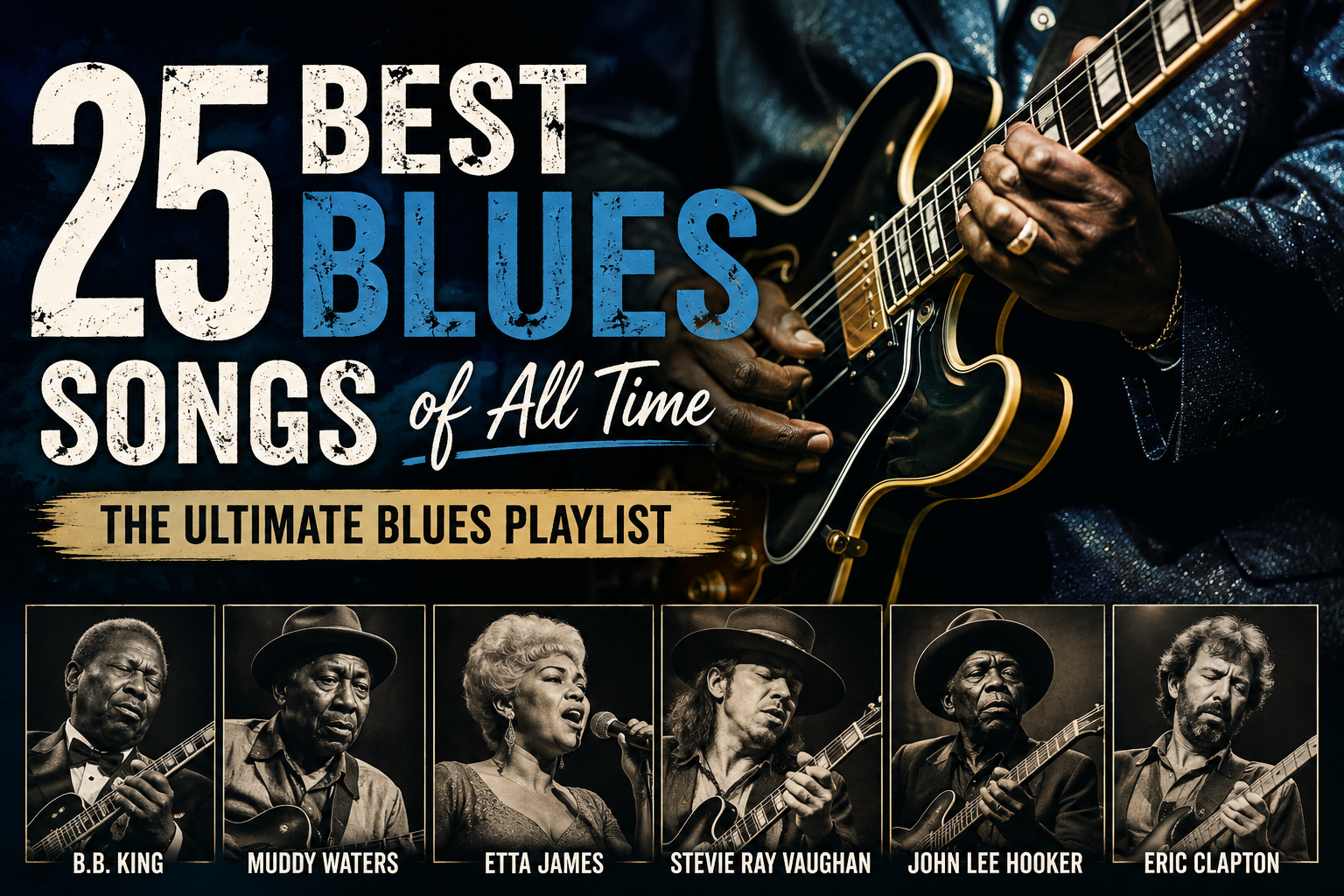
Here are 25 essential blues songs that provide an excellent journey through the sound and evolution of blues music.
1. B.B. King — The Thrill Is Gone
Few recordings demonstrate expressive blues guitar as clearly as The Thrill Is Gone.
B.B. King’s guitar phrasing leaves enormous amounts of space between notes. His controlled bends and distinctive vibrato demonstrate one of the fundamental principles of blues guitar:
You don’t need to play many notes when every note has something to say.
The song remains popular decades later; it currently appears among highly ranked blues recordings in U.S.-focused Spotify popularity data.
2. Muddy Waters — Mannish Boy
If Chicago Blues needed a soundtrack, Mannish Boy would be one of the strongest candidates.
The repetitive riff, commanding vocals and call-and-response arrangement capture the raw electricity associated with postwar Chicago Blues.
Muddy Waters helped transform Southern blues traditions into a louder urban form that would influence generations of musicians.
3. John Lee Hooker — Boom Boom
Boom Boom demonstrates how powerful a simple blues groove can become.
John Lee Hooker’s music frequently relied on hypnotic rhythmic repetition rather than complicated arrangements.
That approach helped make his music immediately recognizable.
The recording continues to reach enormous audiences, with Boom Boom appearing among highly streamed U.S. blues tracks in current Soundcharts data.
4. Etta James — I’d Rather Go Blind
Blues isn’t only about guitar.
Sometimes the human voice carries everything.
I’d Rather Go Blind became one of Etta James’ defining performances, combining blues and soul into an intensely emotional recording.
It also remains exceptionally popular with modern listeners, ranking highly in current U.S.-focused blues popularity data.
5. Stevie Ray Vaughan — Pride and Joy
Texas Blues guitar exploded into a new generation with Stevie Ray Vaughan.
Pride and Joy combines powerful shuffle rhythm, aggressive guitar attack and expressive lead playing.
For guitarists exploring Texas Blues, it remains an essential reference.
Current streaming data also shows the song continuing to attract a substantial audience.
6. Robert Johnson — Cross Road Blues
Few blues musicians have inspired as much mythology as Robert Johnson.
Recorded in the 1930s, Cross Road Blues became one of the recordings most closely associated with his legacy.
Johnson’s rhythmic guitar approach would influence generations of blues and rock musicians.
7. Howlin’ Wolf — Smokestack Lightning
Howlin’ Wolf possessed one of the most recognizable voices in blues history.
Smokestack Lightning combines hypnotic repetition, raw vocals and electric blues atmosphere into a performance that feels almost primal.
Its influence reaches far beyond traditional blues.
8. Albert King — Born Under a Bad Sign
Born Under a Bad Sign became one of the great electric blues standards.
Albert King’s enormous bends and powerful guitar phrasing influenced generations of players who followed.
His approach demonstrated how a single sustained guitar note could carry as much emotional weight as an entire fast solo.
9. Freddie King — Hide Away
Instrumental blues guitar deserves its own place in blues history.
Freddie King’s Hide Away became an important guitar instrumental and helped demonstrate that a blues guitarist could carry a complete performance without relying on vocals.
Its influence became particularly significant among later electric blues and British Blues guitarists.
10. Buddy Guy — Damn Right, I’ve Got the Blues
Buddy Guy helped connect classic Chicago Blues with a more explosive modern electric guitar approach.
His playing can move from quiet, restrained phrases to aggressive guitar attacks within seconds.
That dynamic character helped influence generations of blues-rock guitarists.
11. Elmore James — Dust My Broom
Few sounds are more instantly associated with blues than Elmore James’ slide guitar.
Dust My Broom became one of the essential recordings for understanding electric slide blues.
Its opening guitar figure remains one of blues music’s most recognizable sounds.
12. T-Bone Walker — Call It Stormy Monday
Before many later electric guitar heroes arrived, T-Bone Walker was already demonstrating how sophisticated electric blues guitar could become.
Call It Stormy Monday became a blues standard interpreted by generations of musicians.
13. Willie Dixon — Spoonful
Willie Dixon was one of blues history’s most important songwriters.
Spoonful became closely associated with the Chicago Blues tradition and was later interpreted by numerous artists.
His songwriting helped create material that became fundamental to the blues repertoire.
14. Little Walter — My Babe
Chicago Blues wasn’t driven by guitar alone.
Little Walter transformed amplified harmonica into a powerful lead instrument capable of competing with electric guitar.
My Babe remains one of his most famous recordings.
15. Sonny Boy Williamson II — Help Me
Help Me combines blues vocals, harmonica and a memorable groove.
It became a blues standard and remains an excellent example of how blues musicians create enormous impact from relatively simple musical structures.
16. Eric Clapton — Before You Accuse Me
British musicians helped introduce American blues traditions to enormous new audiences.
Eric Clapton became one of the guitarists most closely associated with that movement.
His interpretations helped connect traditional blues vocabulary with British Blues and later Blues Rock.
Clapton remains extremely popular among U.S. listeners; several of his recordings rank highly in current blues streaming and popularity data.
17. Cream — Crossroads
Robert Johnson’s music traveled through generations.
Cream’s famous electric interpretation of Crossroads demonstrated how Delta Blues material could be transformed into powerful amplified blues-rock.
It also became an important reference point for electric guitar players.
18. The Allman Brothers Band — Statesboro Blues
The Allman Brothers Band brought blues into the world of Southern Rock while maintaining deep connections to blues guitar.
Their interpretation of Statesboro Blues became especially famous for slide guitar.
The band’s blues-rooted catalog continues to perform strongly with American listeners.
19. Gary Moore — Still Got the Blues
Gary Moore brought enormous sustain and rock-level guitar power into slow electric blues.
Still Got the Blues became one of the recordings most associated with his blues period.
Its long bends and singing lead tone made it especially popular among guitar enthusiasts.
20. Stevie Ray Vaughan — Texas Flood
If Pride and Joy demonstrates the energetic side of Stevie Ray Vaughan, Texas Flood demonstrates his ability to stretch blues guitar phrases into long emotional statements.
The track became one of the defining recordings of modern Texas electric blues.
21. Albert Collins — Frosty
Albert Collins developed one of the most distinctive electric guitar sounds in blues.
His sharp, cutting tone and unusual phrasing gave Texas Blues another instantly recognizable voice.
Frosty is an excellent introduction to his instrumental guitar approach.
22. Junior Wells — Hoodoo Man Blues
Junior Wells became an important figure in Chicago’s blues scene.
His work demonstrates the powerful interaction between vocals, harmonica, electric guitar and rhythm section that helped define Chicago Blues.
23. Magic Sam — All Your Love
Magic Sam brought a distinctive guitar attack and rhythmic energy to Chicago’s West Side blues scene.
All Your Love became one of the recordings closely associated with his legacy.
His playing helped push electric Chicago Blues toward increasingly guitar-driven territory.
24. Lightnin’ Hopkins — Mojo Hand
Texas Blues existed long before the high-powered electric guitar styles many listeners associate with the region today.
Lightnin’ Hopkins developed an intimate and highly personal approach to Texas blues guitar.
Mojo Hand provides an excellent entry point into his music.
25. Ray Charles — I’ve Got a Woman
Ray Charles cannot be confined neatly to one genre.
His music brought together gospel, blues, jazz and rhythm and blues, helping reshape American popular music.
I’ve Got a Woman remains enormously popular and appears among highly streamed U.S. tracks classified within blues datasets today.
What Makes a Great Blues Song?
Looking across these recordings reveals something interesting.
There isn’t one formula.
Some rely on acoustic guitar.
Others use enormous electric tones.
Some are built around harmonica.
Others are carried almost entirely by vocals.
But great blues performances often share several characteristics: emotional honesty, memorable phrasing, strong groove, call-and-response, improvisation and the ability to make relatively simple musical ideas feel deeply personal.
That is why blues songs recorded decades ago continue finding new listeners.
From Chicago Blues to Texas Blues3
The differences become even clearer when blues styles are heard side by side.
bluesmusica.com/ has explored a musical journey through Chicago, Memphis, Swamp, Piedmont, Delta, Psychedelic, Jump, British, Country, Hill Country, West Coast, Acoustic, Blues Rock and Texas Blues.
Read our guide:
From Chicago Blues to Texas Blues
The article explains how guitar tone, rhythm and atmosphere change as blues travels between regions and generations.
Listen to a Journey Through Blues Guitar
If you want to hear these stylistic differences rather than only read about them, DEBAGONG created an original long-form instrumental journey exploring multiple blues traditions.
Listen to DEBAGONG — From Chicago Blues to Texas Blues
The collection moves through 15 blues styles, from Chicago electric guitar to Texas Blues and finally DEBAGONG’s own Blues With Human Whistling concept.
Why Classic Blues Songs Still Matter
Current listening data suggests that classic blues hasn’t disappeared.
Etta James, Eric Clapton, Stevie Ray Vaughan, B.B. King, John Lee Hooker, Ray Charles and the Allman Brothers continue appearing prominently in U.S.-focused blues streaming and popularity rankings.
That longevity tells us something important.
Technology changes.
Production changes.
Audiences change.
But a great blues performance can survive all of them.
Final Thoughts
Choosing only 25 of the best blues songs will always leave something important out.
That’s part of what makes blues worth exploring.
Robert Johnson leads listeners toward Delta Blues. Muddy Waters opens the door to Chicago. B.B. King demonstrates the power of phrasing. Stevie Ray Vaughan leads toward Texas. Etta James shows how devastating a blues-influenced vocal can become.
There isn’t one road through blues music.
There are hundreds.
The best place to begin is simply to choose a song, press play and follow wherever the blues takes you.
Blues Music 25 Best Blues Songs of All Time