
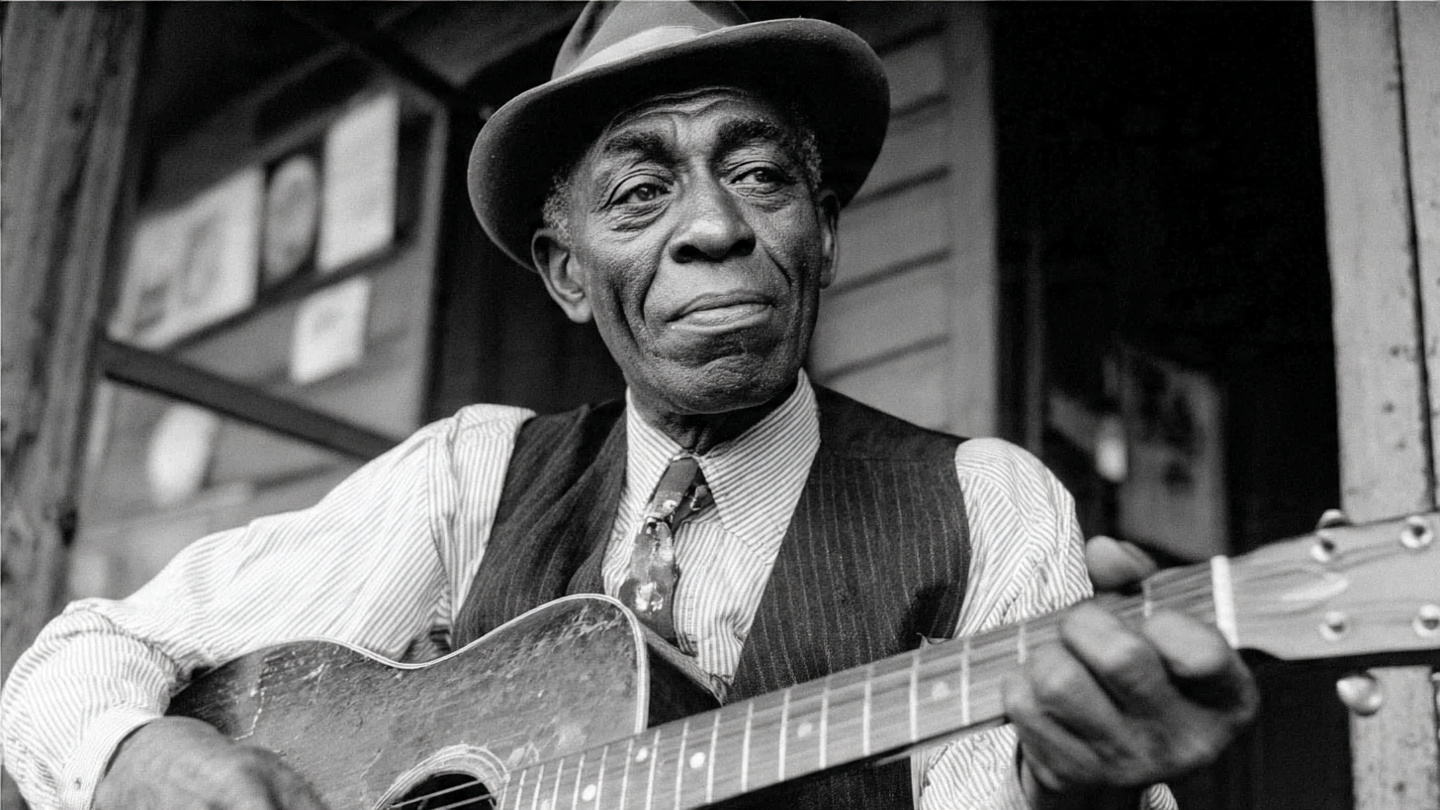

Mississippi John Hurt is remembered as one of the most warm and gentle figures in blues history. His soft singing voice, relaxed fingerstyle guitar, and welcoming personality created a blues sound that felt intimate and deeply human.
Born John Smith Hurt on July 3, 1893, in Teoc, Mississippi, he spent much of his life as a sharecropper. Music was not a path to fame for Hurt at first, but a natural expression of everyday life.
Early Life and Country Blues Roots
John Hurt grew up in rural Mississippi, learning music informally from local musicians. His style reflected country blues, a form that emphasized melody, rhythm, and storytelling rather than emotional intensity or volume.
Like many early blues musicians, Hurt relied on simple instruments that were easy to carry and play. The most common tools used by rural blues musicians are explained in this internal article:
👉 https://bluesmusica.com/what-instrument-would-rural-blues-musicians-most-often-use/
These limitations shaped Hurt’s elegant and efficient playing style.
Fingerstyle Guitar and Gentle Vocals
Mississippi John Hurt’s guitar playing was precise and melodic. His thumb maintained a steady bass rhythm while his fingers played syncopated melodies on the higher strings.
Unlike the raw shouting style of Delta blues, Hurt sang softly and clearly. His voice invited listeners in rather than overwhelming them, making his music accessible and comforting.
Songs and Storytelling
Hurt’s songs often focused on simple stories, humor, love, and daily experiences. Tracks like Candy Man, Spike Driver Blues, and Louis Collins became enduring classics.
His storytelling showed that blues did not always need darkness or intensity to be meaningful. Instead, Hurt proved that subtle emotion could be just as powerful.
Disappearance and Rediscovery
Mississippi John Hurt recorded a small number of songs in the late 1920s, but commercial success was limited. He returned to a quiet life in Mississippi and disappeared from the music scene for decades.
During the folk and blues revival of the early 1960s, researchers rediscovered Hurt. His return to performing introduced his gentle blues style to a new generation of fans.
Influence on Folk and Modern Music
Hurt’s rediscovery had a major impact on the American folk revival. His fingerpicking technique influenced countless folk and acoustic blues musicians.
The broader influence of blues on modern genres is explored further in this internal article:
👉 https://bluesmusica.com/blues-influences-in-contemporary-rock-music/
His music demonstrated how blues could evolve naturally into folk and acoustic traditions.
Cultural Recognition and Legacy
Mississippi John Hurt is now celebrated as a master of country blues. His recordings are studied for their clarity, timing, and emotional balance.
Cultural institutions such as the Smithsonian National Museum of African American History and Culture recognize the importance of blues pioneers like Hurt in preserving American musical history:
👉 https://nmaahc.si.edu/
Why Mississippi John Hurt Still Matters
Mississippi John Hurt matters because he revealed the softer side of blues. His music offers comfort, rhythm, and humanity rather than confrontation.
His legacy continues in every acoustic blues and folk performance that values warmth, simplicity, and honest expression.
🎥 Blues Live Performance
Support the living blues tradition by subscribing to the Debagong channel:


