
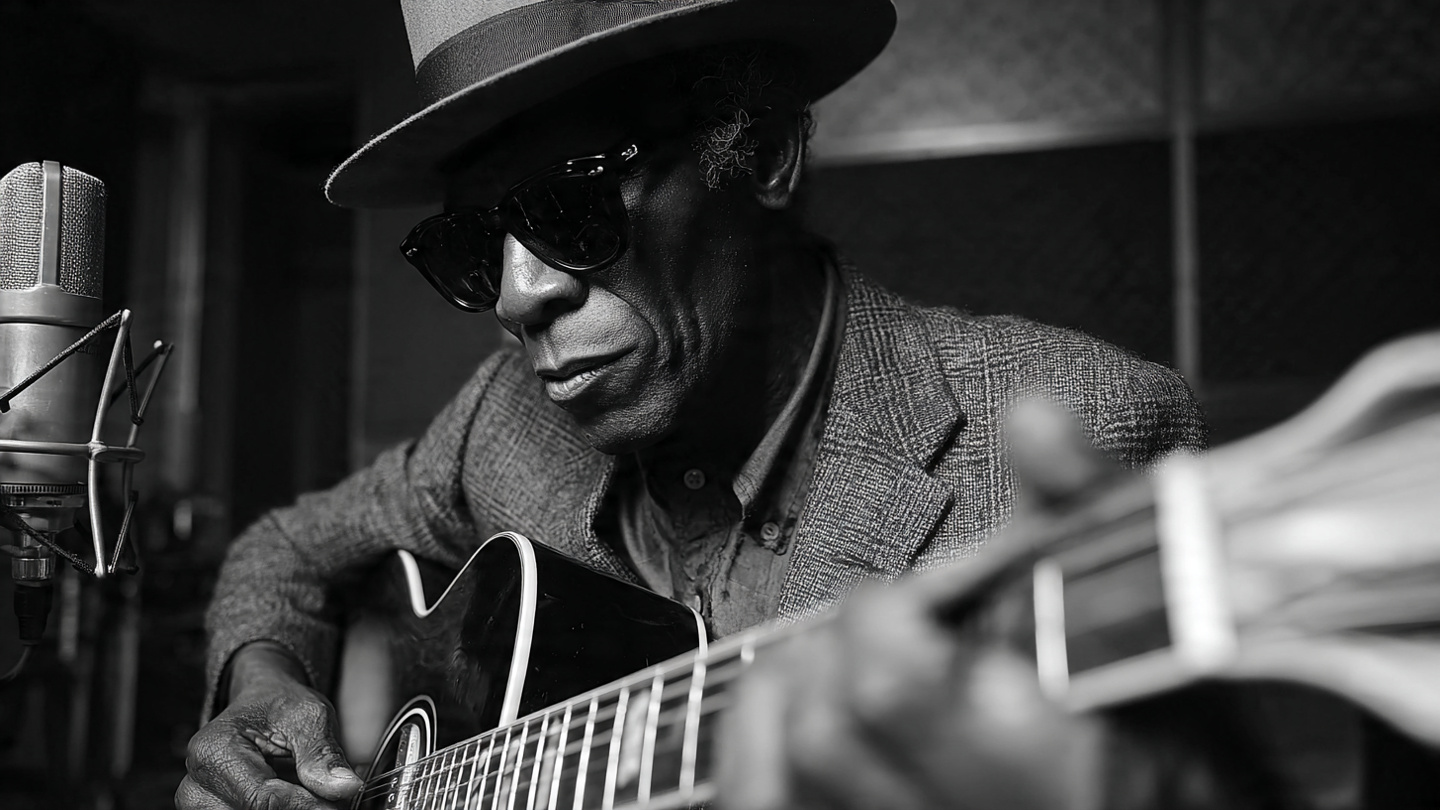

Lightnin’ Hopkins stands as one of the most authentic and influential figures in blues history. Known for his raw guitar sound, conversational singing style, and spontaneous lyrics, Hopkins defined what the world now recognizes as Texas blues.
Born Sam John Hopkins on March 15, 1912, in Centerville, Texas, he grew up surrounded by the sounds of Southern folk music and blues. His music reflected everyday life, personal struggle, and sharp observation, delivered with honesty and emotion.
Early Life and Texas Roots
Lightnin’ Hopkins learned blues informally, absorbing techniques from older musicians and local gatherings. Texas blues emphasized rhythm, storytelling, and independence rather than strict musical structure.
Like many early blues musicians, Hopkins relied on simple instruments and self-taught methods. This internal article explains the instruments commonly used by rural blues players:
👉 https://bluesmusica.com/what-instrument-would-rural-blues-musicians-most-often-use/
His loose timing and free-form guitar playing became a defining feature of his sound.
A Unique Guitar and Vocal Style
Lightnin’ Hopkins played guitar in a percussive, rhythmic way, often treating the instrument as both melody and rhythm section. He frequently improvised lyrics, responding to his environment, audience, or emotions in real time.
His vocals sounded like spoken conversation, making listeners feel as though he was telling them a personal story. This natural delivery set him apart from more polished blues performers.
Recording Career and Recognition
Hopkins recorded hundreds of songs across multiple labels, sometimes under different names. His prolific output captured a wide emotional range—from humor to hardship—making his catalog one of the richest in blues history.
Songs like Mojo Hand, Baby Please Don’t Go, and Shotgun Blues became classics and remain widely studied by blues musicians today.
Influence on Blues and Rock Musicians
Lightnin’ Hopkins influenced generations of blues and rock artists. His relaxed structure and expressive guitar style inspired musicians such as Jimi Hendrix, Stevie Ray Vaughan, and Townes Van Zandt.
His influence on modern blues-rock can be traced through the broader evolution of blues music, explored further in this internal article:
👉 https://bluesmusica.com/blues-influences-in-contemporary-rock-music/
Hopkins proved that technical perfection was less important than emotional truth.
Cultural Importance and Legacy
Lightnin’ Hopkins represented the voice of everyday people. His songs documented life in the American South with humor, realism, and resilience.
Major cultural institutions, including the Smithsonian National Museum of African American History and Culture, recognize the importance of blues pioneers like Hopkins in preserving African-American musical heritage:
👉 https://nmaahc.si.edu/
Why Lightnin’ Hopkins Still Matters
Lightnin’ Hopkins matters because he kept blues honest. His music did not chase trends or polish—it stayed real. That authenticity continues to inspire musicians and listeners around the world.
His legacy lives on as the true sound of Texas blues—free, expressive, and deeply human.
🎥 Blues Live Performance
Experience the living spirit of blues through this live performance:


