
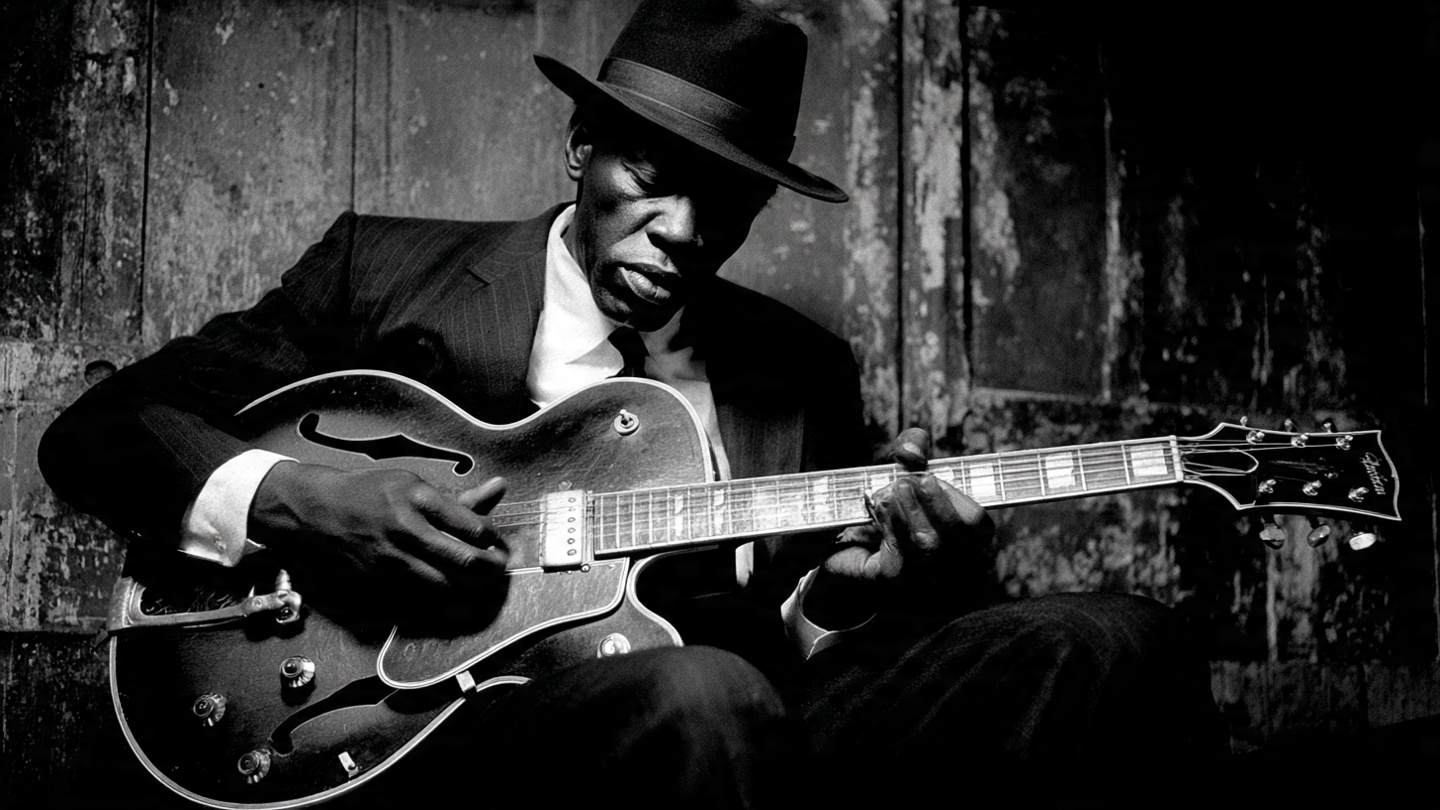

John Lee Hooker was one of the most distinctive voices in blues history. Known as the “Boogie Man,” he created a raw, hypnotic sound that stood apart from traditional Delta and Chicago blues. His music relied on rhythm, repetition, and deep emotional storytelling rather than complex chord structures.
Born on August 22, 1917, in Clarksdale, Mississippi, John Lee Hooker grew up in a deeply musical environment. His stepfather, William Moore, was a blues guitarist who introduced him to a droning, rhythmic guitar style that would later define Hooker’s career.
Early Life and Musical Foundations
Growing up in the Mississippi Delta, John Lee Hooker was exposed to field hollers, spirituals, and early blues traditions. These sounds shaped his sense of rhythm and timing. Unlike many blues musicians, Hooker did not strictly follow standard blues progressions.
Like most rural blues artists of his era, Hooker started with simple instruments and self-taught techniques. This internal article explains the tools commonly used by early blues musicians:
👉 https://bluesmusica.com/what-instrument-would-rural-blues-musicians-most-often-use/
His approach focused on groove and mood, creating music that felt more like a trance than a performance.
The Birth of the Boogie Style
John Lee Hooker’s signature style became known as boogie blues. His guitar playing featured repetitive riffs, stomping foot rhythms, and spoken or half-sung vocals. This style allowed him to perform solo while still sounding powerful and complete.
His breakthrough recording, Boogie Chillen’, released in 1948, became a massive success. The song’s driving rhythm and raw delivery introduced a new direction for blues music and influenced countless musicians.
Detroit Blues and Urban Influence
Unlike many Delta blues artists who moved to Chicago, John Lee Hooker settled in Detroit. The city’s industrial environment influenced his sound, making it darker, more mechanical, and deeply rhythmic.
Detroit blues gave Hooker space to experiment without fitting into strict blues traditions. His independence allowed him to record for multiple labels and maintain creative control over his music.
This evolution of blues into modern styles connects directly to later rock music, as explored in this internal article:
👉 https://bluesmusica.com/blues-influences-in-contemporary-rock-music/
Influence on Rock and Modern Music
John Lee Hooker’s influence extends far beyond blues. Rock bands such as The Rolling Stones, The Doors, ZZ Top, and Canned Heat drew inspiration from his boogie rhythms and raw delivery.
His music proved that blues could be minimal and still incredibly powerful. Many modern blues-rock artists continue to use his repetitive grooves as a foundation for improvisation.
Major cultural institutions recognize his importance in American music history, including the Smithsonian National Museum of African American History and Culture:
👉 https://nmaahc.si.edu/
Longevity and Late Recognition
John Lee Hooker enjoyed a long career that spanned more than five decades. In the later years of his life, he collaborated with younger musicians, introducing his sound to new audiences worldwide.
He received multiple Grammy Awards and a Grammy Lifetime Achievement Award, cementing his status as a blues legend. Despite fame, Hooker remained true to his original sound—raw, hypnotic, and deeply personal.
Why John Lee Hooker Still Matters
John Lee Hooker matters because he proved that blues does not need complexity to be powerful. His music connects directly to human emotion through rhythm, repetition, and honesty.
He stands as a reminder that blues is not about perfection but about feeling. His boogie rhythm continues to pulse through modern blues and rock music today.
🎥 Blues Live Performance
Experience the living spirit of blues through this live performance:


