
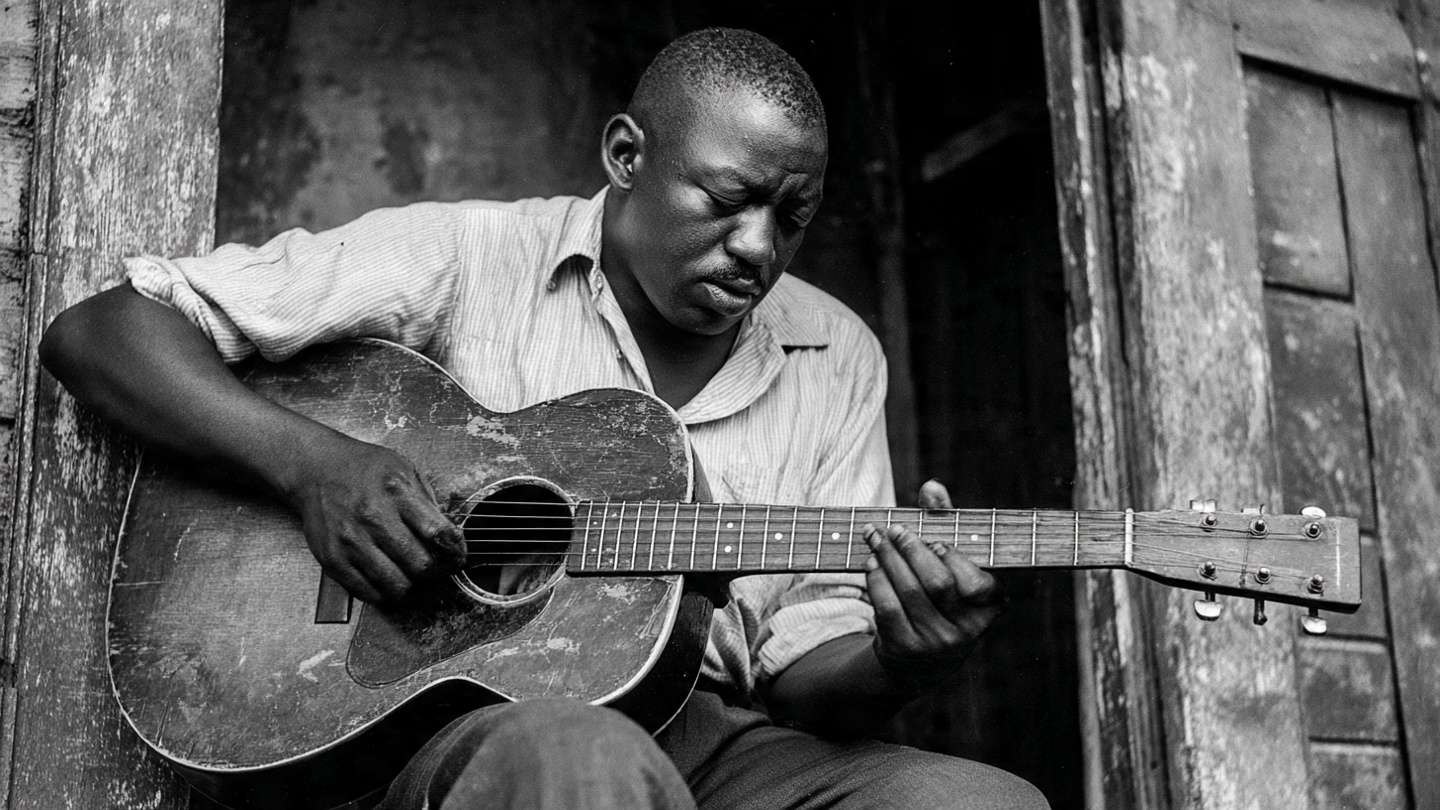

Big Bill Broonzy played a crucial role in the evolution of blues music by connecting its rural roots to the emerging urban sound of the early twentieth century. His career spanned decades of change, making him one of the most adaptable and influential blues musicians in history.
Born Lee Conley Bradley around 1893 in Mississippi, Broonzy grew up immersed in Southern musical traditions. He learned to play guitar at a young age and absorbed the storytelling style that defined early blues. His music reflected everyday life, social change, and personal struggle.
From Rural Beginnings to Musical Growth
Big Bill Broonzy’s early musical life followed the path of many rural blues musicians. He began with simple instruments and learned through observation and practice rather than formal training. These early tools and techniques are explored further in this internal resource:
👉 https://bluesmusica.com/what-instrument-would-rural-blues-musicians-most-often-use/
As Broonzy matured as an artist, he developed a clean guitar style and a warm, expressive voice that made his songs accessible to wide audiences.
Chicago Blues and Adaptation
In the 1920s, Big Bill Broonzy moved to Chicago, where blues music was rapidly evolving. Unlike some musicians who struggled with change, Broonzy adapted effortlessly. He embraced new recording opportunities and adjusted his style to suit both acoustic and electric settings.
He became a leading figure in Chicago blues, recording extensively and working with many major artists of the era. His ability to blend tradition with modern influences helped blues survive in a changing musical landscape.
Songwriting and Storytelling
Broonzy was not only a skilled performer but also a gifted songwriter. His lyrics addressed themes of work, migration, love, and social identity. Songs like Key to the Highway became blues standards, later covered by countless artists across genres.
His songwriting approach influenced both blues and folk musicians, demonstrating that blues storytelling could evolve while remaining authentic.
Influence on Folk and Rock Music
During the folk revival of the 1950s, Big Bill Broonzy found a new audience. He toured Europe extensively, performing acoustic blues that resonated with young listeners and aspiring musicians.
His influence on later blues-rock and folk artists is closely tied to the broader evolution of blues into modern music, as discussed in this internal article:
👉 https://bluesmusica.com/blues-influences-in-contemporary-rock-music/
Artists such as Eric Clapton and Bob Dylan acknowledged the importance of musicians like Broonzy in shaping their musical understanding.
Cultural Recognition and Legacy
Big Bill Broonzy is recognized as a cultural ambassador of blues music. His performances helped introduce blues to international audiences and ensured its survival beyond regional boundaries.
Institutions such as the Smithsonian National Museum of African American History and Culture recognize the importance of blues pioneers like Broonzy in preserving African-American musical heritage:
👉 https://nmaahc.si.edu/
Why Big Bill Broonzy Still Matters
Big Bill Broonzy matters because he proved that blues could grow without losing its soul. He respected tradition while welcoming change, making him a vital link between generations of musicians.
His legacy lives on through the countless artists who continue to draw inspiration from his music, lyrics, and adaptability.
🎥 Blues Live Performance
Experience the living spirit of blues through this live performance:


