
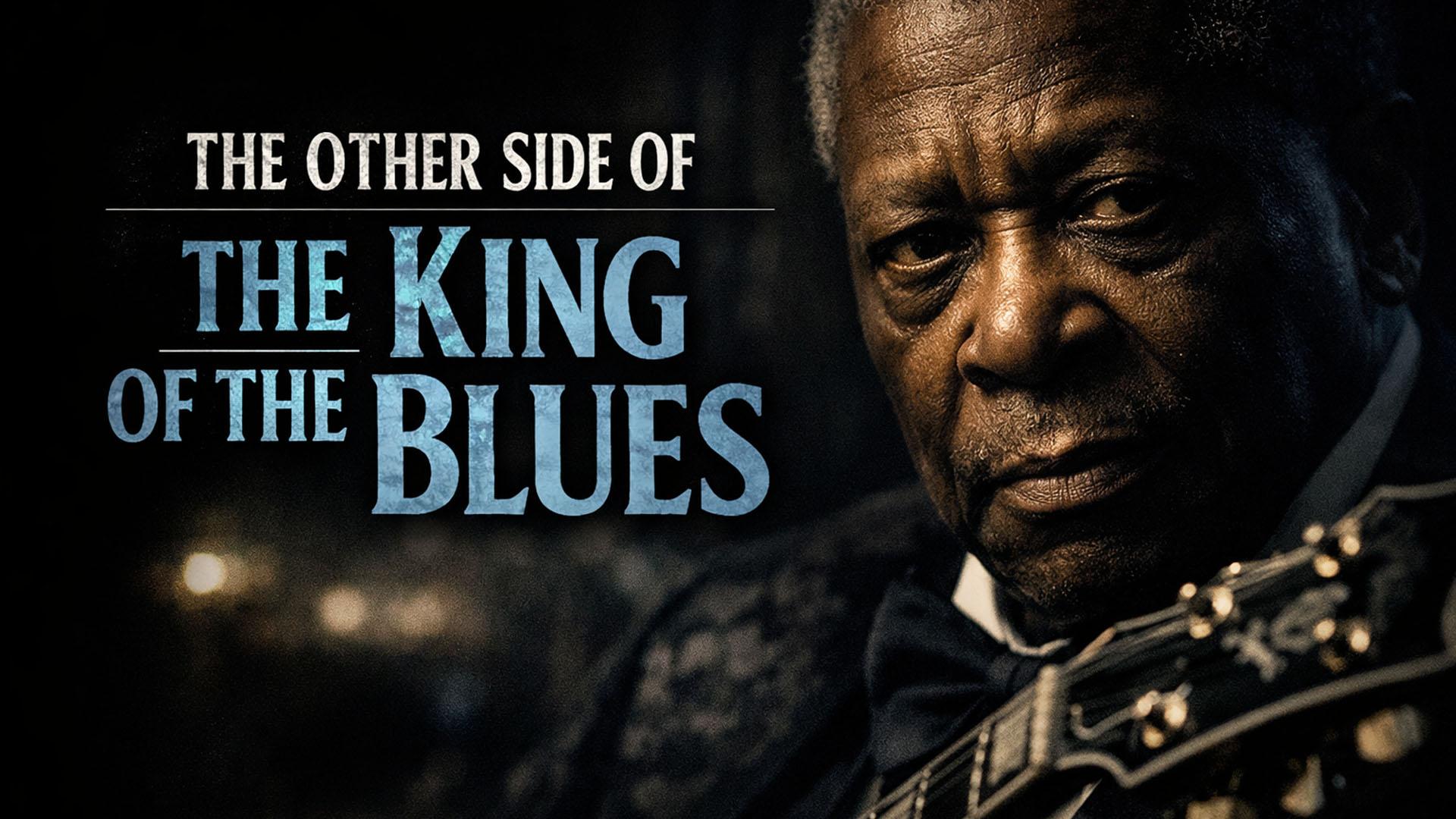

B.B. King was not born a king.
He was born into poverty, hard labor, and silence.
Born in 1925 on a cotton plantation in Mississippi, B.B. King grew up during a time when opportunity was limited and survival depended on physical endurance. As a child, he worked in the fields, picking cotton under the Southern sun, an experience that shaped both his character and the emotional depth of his music.
Music became an escape. Through gospel singing in church and listening to radio broadcasts, B.B. King slowly discovered the power of sound as a form of expression. His early exposure to blues and spiritual music laid the foundation for what would later become one of the most recognizable guitar styles in history.
In the 1940s, B.B. King moved to Memphis, where he worked as a radio disc jockey. It was there that he earned the nickname “Blues Boy,” later shortened to B.B. King. Memphis exposed him to a broader musical world, but success did not come easily. He performed in small clubs, traveled long distances, and faced constant rejection.
One defining moment in his life was the fire incident that led to the naming of his guitar, Lucille. After risking his life to save the instrument from a burning building, B.B. King realized that music was not just a profession—it was his identity. From that moment on, Lucille became his lifelong companion.
Unlike many guitarists, B.B. King did not rely on speed or technical complexity. His strength was emotion. Each note was deliberate, each bend carried weight. His playing style reflected pain, patience, and control—qualities forged through years of struggle rather than instant success.
As his reputation grew, B.B. King became known worldwide as the King of the Blues. He toured relentlessly, performing thousands of shows across decades. Yet behind the fame was a man shaped by discipline, loneliness, and responsibility. Life on the road demanded sacrifice, both personal and physical.
B.B. King passed away in 2015, leaving behind a legacy that transcends music. He did not merely influence blues musicians; he influenced how emotion could be communicated through a single note. His life reminds us that greatness is often built slowly, through endurance rather than spectacle.
This documentary explores the other side of the King of the Blues—not the crown, but the journey beneath it.
Live blues music