
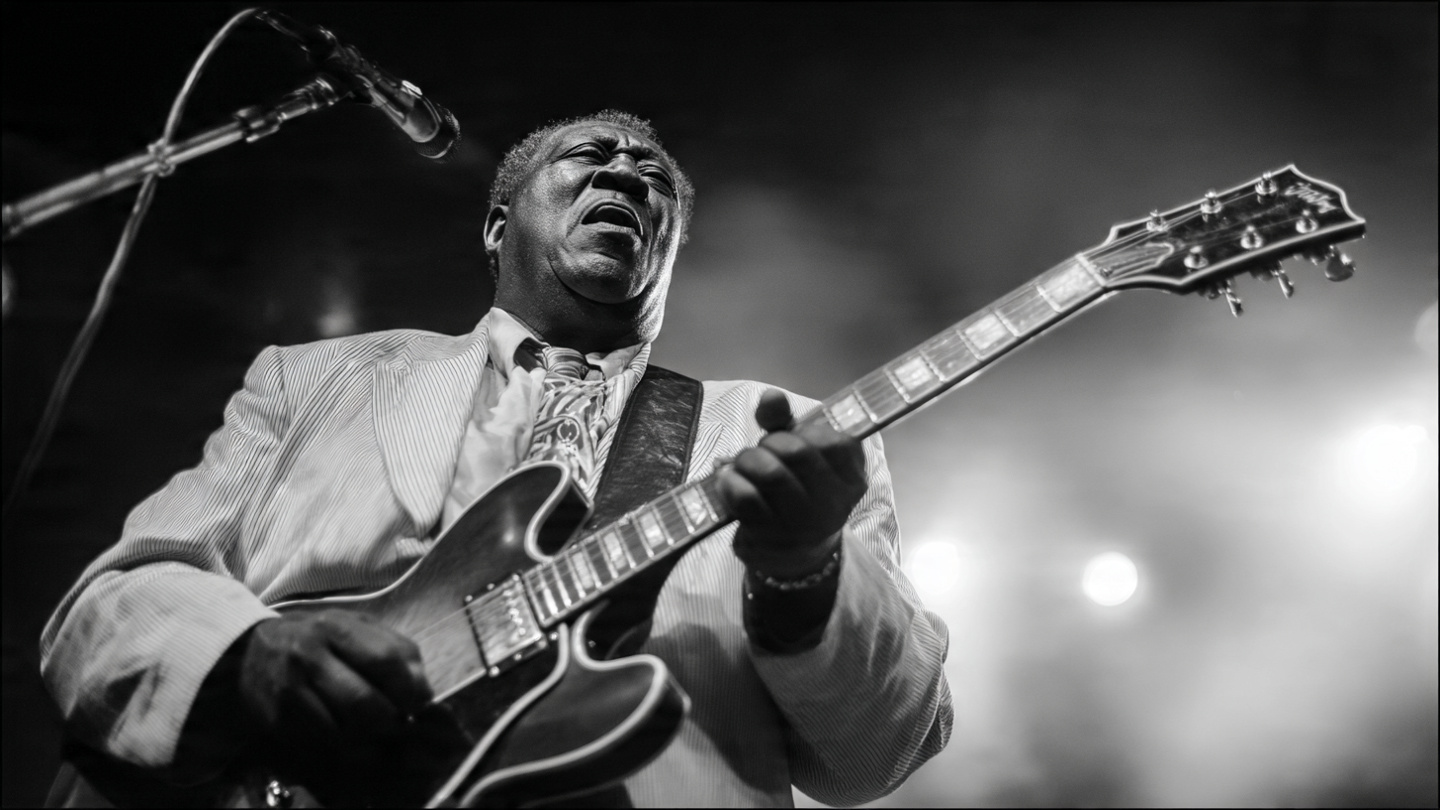
Albert King: The Master of the Flying V & Modern Blues Guitar

Albert King is celebrated as one of the most influential blues guitarists of all time. With his towering presence, left-handed playing style, and thunderous string bends, he helped define the sound of modern electric blues. Often called the “King of the Flying V,” Albert King’s approach to guitar changed how musicians thought about tone, phrasing, and emotional power.
Born Albert Nelson on April 25, 1923, in Indianola, Mississippi, he grew up surrounded by the musical traditions of the Delta. Although he did not receive formal training, his deep connection to blues storytelling and rhythm shaped a style that was instantly recognizable and endlessly influential.
Early Life and Musical Foundations
Albert King’s early life was marked by hard work and limited opportunities, common realities for many African-American musicians in the rural South. He was influenced by gospel music and early country blues, absorbing the emotional weight and call-and-response traditions that later defined his guitar phrasing.
As a left-handed player, Albert King famously played right-handed guitars flipped upside down, without restringing them. This unconventional setup contributed to his unique phrasing and massive string bends, creating a sound that felt raw, vocal, and deeply expressive.
To understand the simple tools that shaped early blues music, this related article offers useful background:
👉 https://bluesmusica.com/what-instrument-would-rural-blues-musicians-most-often-use/
The Flying V and a Signature Sound
Albert King became inseparably associated with the Gibson Flying V guitar, an instrument that visually and sonically set him apart from his peers. The Flying V allowed him to produce a bold, aggressive tone that matched his commanding stage presence.
Musically, Albert King favored slow, deliberate phrasing over speed. His solos were built on wide bends, sustained notes, and dramatic pauses. This approach made every note feel intentional, teaching future guitarists that emotion often matters more than complexity.
His sound bridged the gap between traditional blues and the emerging energy of blues rock, helping blues music evolve without losing its soul.
Stax Records and Defining Recordings
Albert King reached the height of his career during the late 1960s while recording for Stax Records. His album Born Under a Bad Sign is widely regarded as one of the greatest blues records ever made. The title track became an anthem of resilience and identity, resonating far beyond the blues community.
These recordings featured tight rhythm sections, soulful arrangements, and Albert King’s unmistakable guitar voice. His work during this period solidified his reputation as a cornerstone of modern blues.
His music influenced not only blues artists but also funk, soul, and rock musicians who admired his phrasing and tone.
Influence on Rock and Guitar Legends
Albert King’s influence on modern guitar playing is profound. Artists such as Stevie Ray Vaughan, Jimi Hendrix, Eric Clapton, and Gary Moore have openly credited him as a major inspiration.
His approach to bending strings, using space, and building tension became foundational techniques for blues rock guitarists. For a broader exploration of how blues shaped later genres, see this internal resource:
👉 https://bluesmusica.com/blues-influences-in-contemporary-rock-music/
Through Albert King, blues guitar became a powerful voice capable of standing at the center of modern music.
Character, Presence, and Legacy
Albert King was known for his imposing physical presence and confident demeanor. On stage, he commanded attention with minimal movement, letting his guitar do most of the talking. This restraint amplified the emotional impact of his performances.
Cultural historians and music institutions recognize Albert King as a key figure in preserving and advancing blues music. His contributions to American musical heritage are documented by organizations such as the Smithsonian National Museum of African American History and Culture:
👉 https://nmaahc.si.edu/
Albert King passed away on December 21, 1992, but his influence remains deeply embedded in blues and rock music.
Why Albert King Still Matters
Albert King proved that blues could be powerful, modern, and emotionally direct without sacrificing authenticity. His music continues to educate and inspire musicians who seek to express deep feeling through simple, well-placed notes.
In the evolution of blues guitar, Albert King stands as a master craftsman whose legacy continues to shape the sound of modern music.
🎥 Blues Live Performance
Experience the living spirit of blues music through this live performance:


