
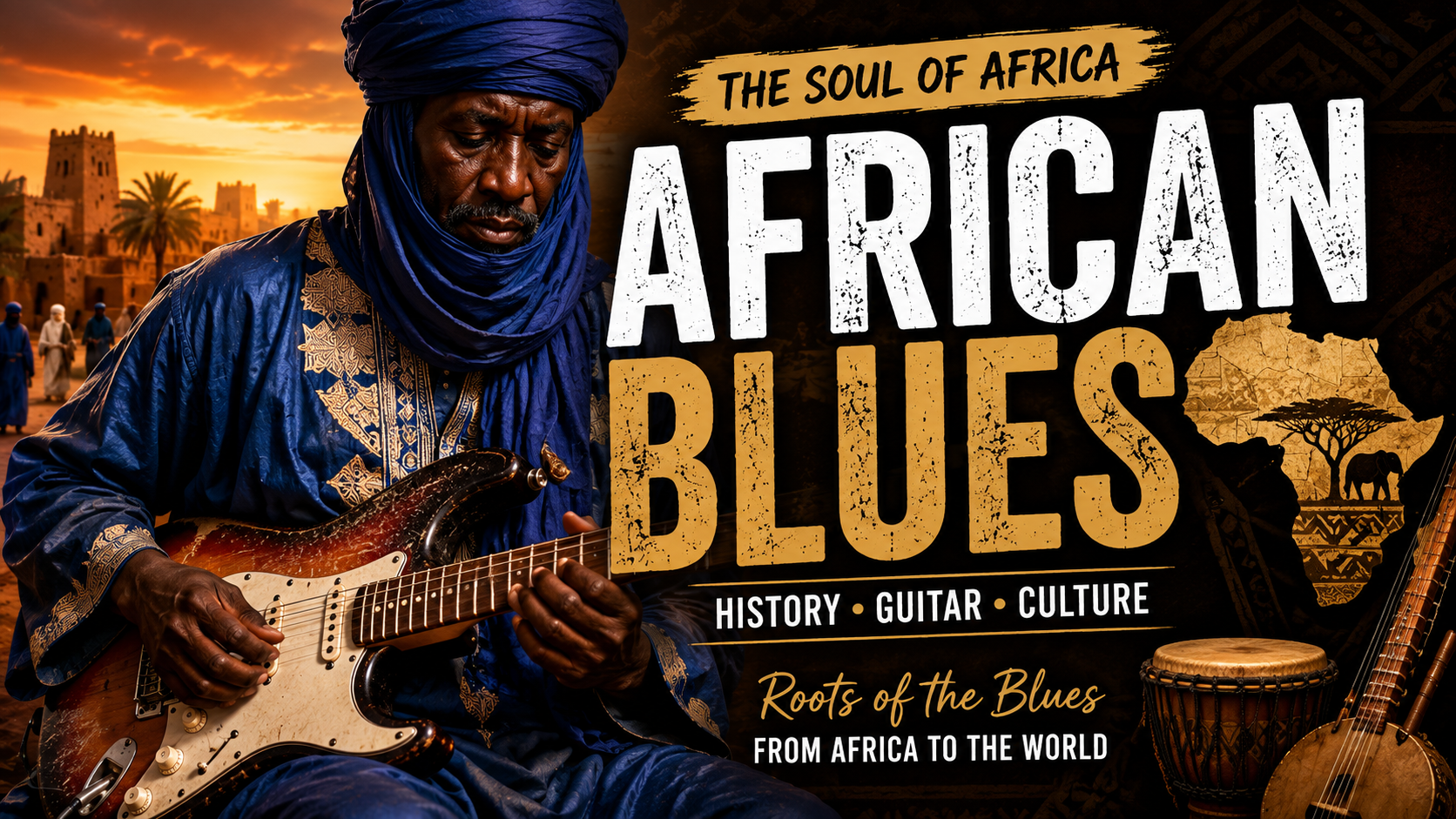
African Blues Music: Discover the Soul, History, and Guitar Traditions of Africa

African Blues Music is one of the richest and most influential musical traditions in the world. While blues is often associated with the American South, many researchers and musicians recognize that its deepest musical roots can be traced back to West Africa. Today, African Blues continues to inspire listeners through expressive guitar playing, powerful storytelling, and rhythms that have been passed down for generations.
Whether you are a blues enthusiast, guitarist, or someone exploring African culture, African Blues offers an unforgettable musical experience filled with emotion, history, and authenticity.
What Is African Blues Music?
African Blues is a broad term describing blues-inspired music created across different regions of Africa. Unlike American Blues, African Blues combines traditional rhythms, indigenous instruments, local languages, and modern guitar techniques.
Its sound often features:
- Expressive electric and acoustic guitars
- Repetitive hypnotic grooves
- Traditional percussion
- Call-and-response singing
- Deep emotional storytelling
- Strong cultural identity
Many listeners immediately recognize its warm, organic, and spiritual atmosphere.
The African Roots of Blues
Long before blues developed in the United States, many West African communities used music as a way to preserve history, celebrate life, and express emotions.
Musical traditions brought across the Atlantic by enslaved Africans influenced what would later become Delta Blues, Gospel, Jazz, and eventually Chicago Blues.
Although American Blues evolved into its own unique style, many musical characteristics remain connected to African traditions, including:
- Vocal expression
- Guitar phrasing
- Improvisation
- Rhythm patterns
- Emotional storytelling
This historical connection continues to inspire musicians around the world.
Desert Blues: Africa’s Modern Guitar Sound
One of the most internationally recognized forms of African Blues is Desert Blues, a style that emerged from the Sahara region.
Known for its mesmerizing guitar melodies and driving rhythms, Desert Blues blends traditional African music with blues-inspired improvisation.
The style has gained worldwide recognition for its atmospheric sound and emotional depth, attracting listeners far beyond Africa.
Why African Blues Is Growing Worldwide
African Blues has become increasingly popular because it offers something both familiar and unique. Blues fans appreciate its soulful guitar melodies, while world music listeners are drawn to its rich cultural heritage.
Today, African Blues can be heard at international music festivals, on streaming platforms, and in collaborations with artists from many different countries.
As interest in global blues continues to grow, African Blues is earning the recognition it deserves as one of the world’s most inspiring musical traditions.
Explore More Blues Traditions
At bluesmusica.com/, we celebrate the diverse world of blues by exploring its history, legendary artists, guitar traditions, and modern interpretations.
Whether you enjoy Chicago Blues, Delta Blues, Texas Blues, or African Blues Music, our goal is to share authentic stories and original music that keep the spirit of blues alive for listeners everywhere.
Conclusion
African Blues Music is more than a genre—it’s a living tradition that connects history, culture, and emotion through unforgettable guitar melodies and timeless storytelling.
Its influence reaches far beyond Africa, reminding us that music has the power to unite people across cultures and generations.
If you love authentic guitar music, African Blues is a journey worth exploring.