BluesMusica.com – B.B. King Biopic Lucille – The Story Behind the Blues Legend

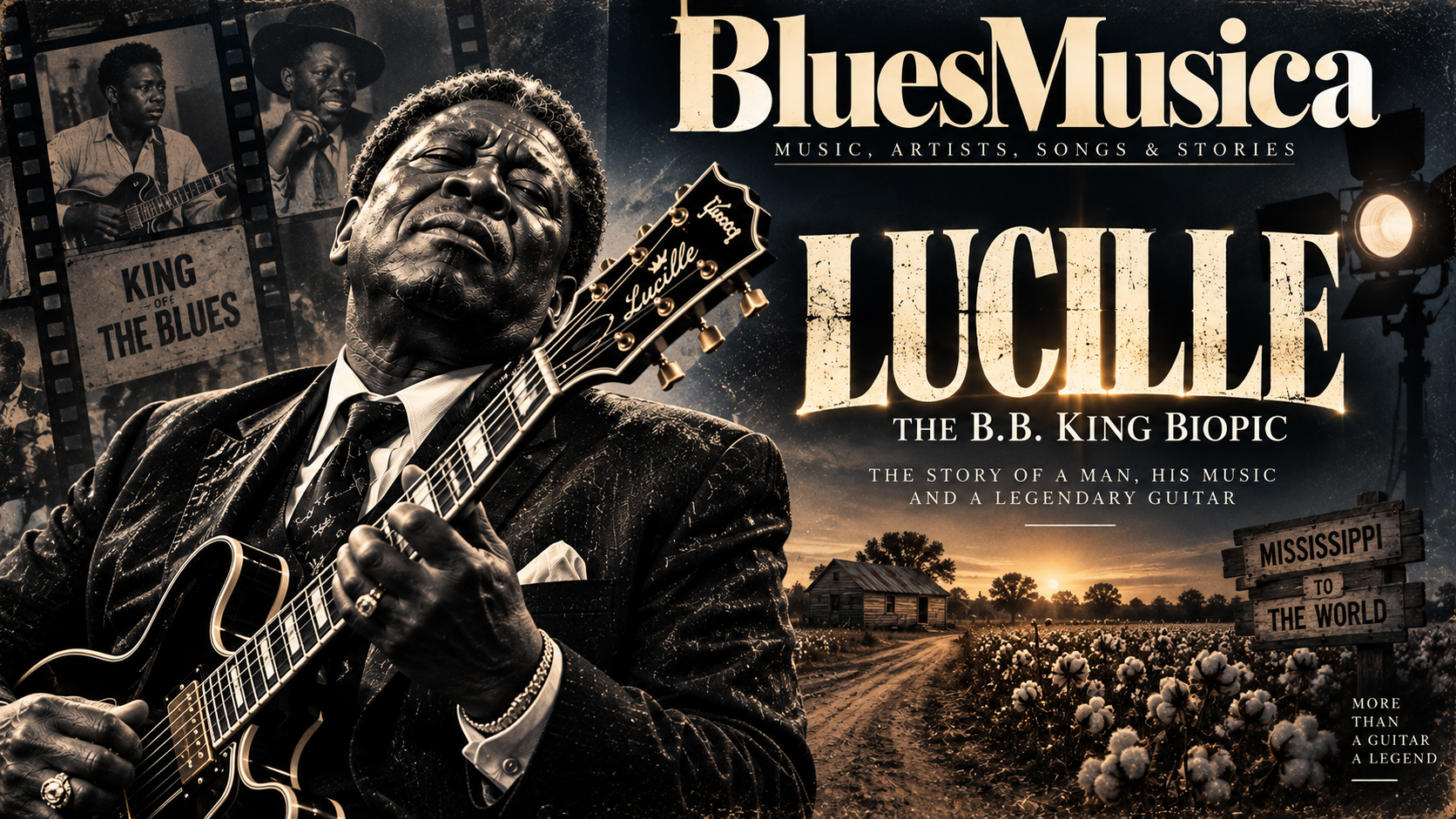
BluesMusica.com: A new film about one of the most important figures in blues history is being developed. Titled LUCILLE, the authorized B.B. King biopic will tell the story of Riley B. King, the Mississippi-born musician who became known around the world as the King of the Blues.
The film is being developed by Canton Entertainment, Vassal Benford, and The B.B. King Music Company & Estate. According to the official B.B. King website, LUCILLE will chronicle King’s rise from extreme poverty to international stardom, with his famous guitar Lucille at the center of the story.
For blues fans, the project offers an opportunity to revisit the remarkable journey of a musician whose career connected the Mississippi Delta, Memphis, Chicago, electric blues, rock music, and international audiences.
Who Was B.B. King?
B.B. King was born Riley B. King on September 16, 1925, in Mississippi.
He grew up in the Mississippi Delta, surrounded by the music and culture that would eventually become the foundation of his career.
From humble beginnings working in the cotton fields, King developed into a professional musician, radio personality, recording artist, touring performer, and eventually one of the most recognizable ambassadors of the blues.
The official B.B. King biography describes a career that lasted nearly seven decades and took him from the rural Mississippi Delta to major concert halls around the world. :contentReference[oaicite:1]{index=1}
What Is the B.B. King Biopic LUCILLE?
LUCILLE is an authorized feature film about B.B. King’s life, music, and global influence.
The project is being developed in partnership with Canton Entertainment, Vassal Benford, and The B.B. King Music Company & Estate.
The official B.B. King website describes the project as the first and only authorized feature film chronicling the life and legacy of the King of the Blues. :contentReference[oaicite:2]{index=2}
The film is named after King’s legendary guitar, Lucille.
That name is particularly fitting because Lucille was not simply an instrument in King’s career. It became part of his identity and one of the most recognizable symbols of his music.
Why Is the Film Called Lucille?
The name Lucille comes from one of the most famous stories in B.B. King’s life.
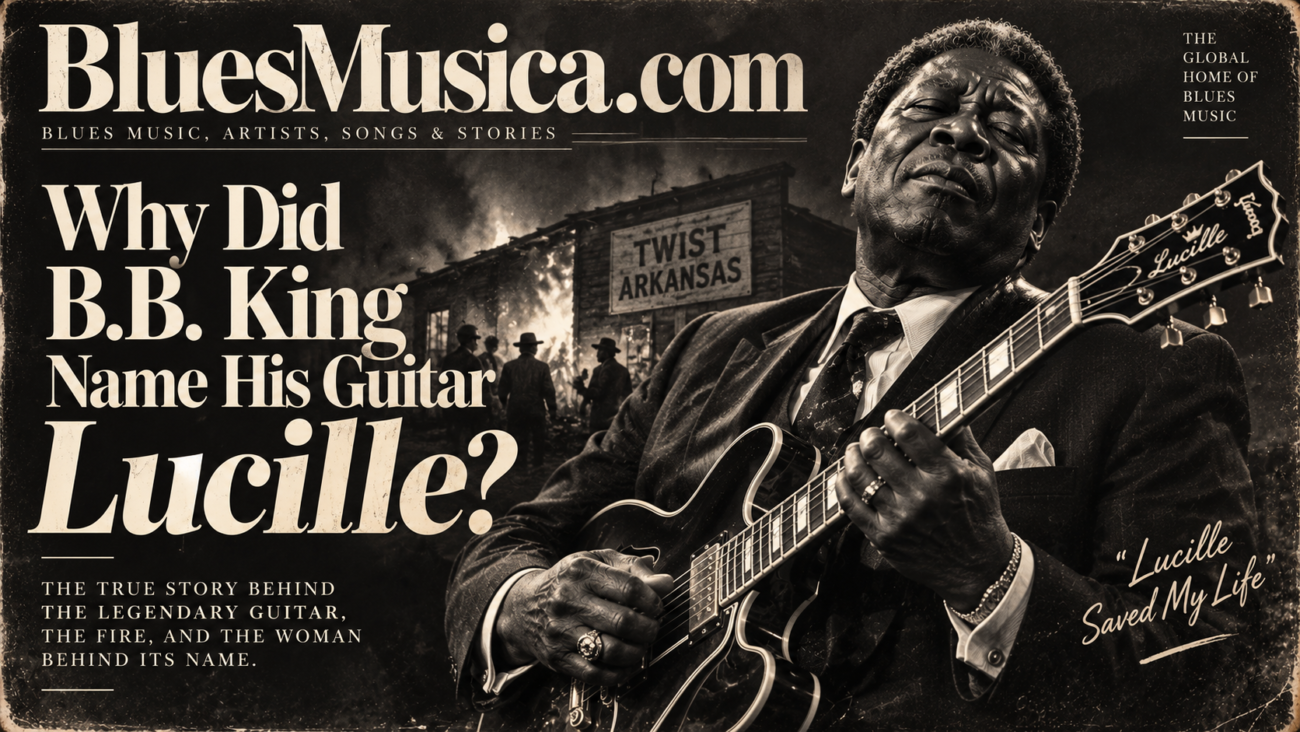
In 1949, King was performing at a dance hall in Twist, Arkansas, when a fight broke out.
The venue was being heated by a barrel containing kerosene. During the fight, the barrel was knocked over and the building caught fire.
King escaped but realized that his guitar was still inside.
He returned to the burning building to retrieve it.
The following day, King learned that the fight had reportedly been over a woman named Lucille.
He subsequently gave his guitar the name Lucille as a reminder of the incident and of the danger of risking his life over a fight or a woman.
The story became one of the defining chapters of B.B. King’s relationship with his guitar. :contentReference[oaicite:3]{index=3}
Lucille Was More Than a Guitar
Throughout his career, B.B. King used the name Lucille for his guitars.
It eventually became one of the strongest visual and musical symbols associated with him.
When audiences saw King walk onto a stage with his black Gibson guitar, they were seeing more than an instrument.
They were seeing a piece of the story that had followed him for decades.
The official B.B. King website describes Lucille as a lifelong partner in his musical journey. :contentReference[oaicite:4]{index=4}
From the Cotton Fields to the World Stage
One of the most powerful elements of B.B. King’s story is the distance between his childhood and his eventual international fame.
He grew up in rural Mississippi during an era when life in the segregated South presented enormous economic and social challenges.
Music eventually became his path forward.
His early experiences with gospel, blues, radio, and the musical culture of the Delta shaped the sound that he would later take around the world.
The official biography traces his journey from the cotton fields of Mississippi through Memphis and the Chitlin’ Circuit before his eventual rise to international fame. :contentReference[oaicite:5]{index=5}
How B.B. King Became B.B. King
Before the world knew him as B.B. King, he was Riley B. King.
His professional identity developed during his years in Memphis, where he worked in radio and performed on Beale Street.
His nickname evolved from the phrase “Beale Street Blues Boy” and was eventually shortened to B.B.
That short name would eventually become one of the most famous names in blues music.
The Early Recording Career
B.B. King made his first recording in 1949.
He subsequently signed with the Modern Records organization and began building a national audience through a series of successful rhythm and blues recordings.
One of the major breakthroughs came with 3 O’Clock Blues, which reached No. 1 on the R&B chart in 1952.
King followed it with recordings that became important parts of his musical legacy, including Every Day I Have the Blues, Sweet Little Angel, and You Upset Me Baby. :contentReference[oaicite:6]{index=6}
The Guitar That Sang
B.B. King’s guitar style became one of the defining sounds of electric blues.
Rather than relying on extremely fast guitar playing, King focused on phrasing, vibrato, bends, timing, dynamics, and space.
He often treated his guitar as another voice.
He would sing a phrase and answer it with Lucille.
That call-and-response approach gave his performances an almost conversational quality.
The official B.B. King biography highlights this distinctive relationship between King’s singing and his guitar playing. :contentReference[oaicite:7]{index=7}
B.B. King and The Thrill Is Gone
One of the most important moments in King’s mainstream career came with The Thrill Is Gone.
Released around the end of the 1960s, the recording introduced B.B. King’s blues to an even wider audience.
The combination of King’s emotional vocal performance, orchestral arrangement, and expressive guitar helped turn the song into one of his signature recordings.
For many listeners around the world, The Thrill Is Gone became their first introduction to B.B. King.
B.B. King and the Rock Generation
B.B. King’s influence did not remain limited to blues audiences.
As rock music expanded during the 1960s and 1970s, a new generation of guitarists began studying the blues musicians who had created the foundation for electric guitar music.
B.B. King became an important influence on guitarists across blues and rock.
His collaborations with major artists also introduced his music to audiences who might not otherwise have discovered traditional blues.
The official B.B. King website notes collaborations and musical relationships involving artists including Eric Clapton, U2, The Rolling Stones, Richie Sambora, and Carlos Santana. :contentReference[oaicite:8]{index=8}
B.B. King as a Global Ambassador for the Blues
King’s career eventually became much larger than the American blues circuit.
He performed around the world and helped introduce blues music to audiences across multiple generations and cultures.
His international touring career became an important part of his legacy.
He demonstrated that the emotional language of the blues could connect with audiences far beyond the communities where the music originated.
Why B.B. King’s Story Works on Film
B.B. King’s life contains many of the elements that make a powerful music story.
There is the Mississippi Delta.
There is poverty and hard work.
There is gospel and blues.
There is Memphis and Beale Street.
There is the demanding life of a touring musician.
There is Lucille.
There are international stages.
And there is the transformation of a young musician from Mississippi into one of the most recognizable blues artists in history.
That journey gives LUCILLE a broad story that extends far beyond music.
The Authorized B.B. King Story
The involvement of The B.B. King Music Company & Estate is significant because the project is being presented as an authorized film.
The official announcement states that the project is intended to chronicle King’s life, music, and global influence. :contentReference[oaicite:9]{index=9}
The project also has a direct connection to King’s estate and legacy initiatives, which are focused on preserving his music and introducing his work to new audiences.
The B.B. King Legacy Continues
The B.B. King estate has been developing several projects connected to his legacy.
The official website currently lists initiatives involving film, new music releases, live experiences, documentaries, educational programs, and the expansion of the B.B. King Museum and Delta Interpretive Center. :contentReference[oaicite:10]{index=10}
This means the story of B.B. King continues to be presented to audiences in different formats.
Music recordings preserve his performances.
Museums preserve his history.
Documentaries provide historical context.
And a feature film can introduce his story to people who may know the name B.B. King without knowing the journey behind it.
The Mississippi Delta Connection
To understand B.B. King, it is important to understand the Mississippi Delta.
The region became one of the most important cultural environments in blues history.
King’s childhood in Mississippi connected him to a musical tradition that included work songs, gospel, Delta blues, and the sounds of rural Southern communities.
His later career transformed those influences into a sophisticated electric blues style that could fill enormous concert halls.
From Dirt Roads to International Stages
The contrast between King’s early life and his later career is one of the most remarkable parts of his story.
A child raised around cotton fields eventually became an international touring artist.
A musician who began within the world of Southern blues eventually performed for audiences around the globe.
And the guitar that survived a dance hall fire became one of the most famous instruments in popular music.
What Made B.B. King Different?
B.B. King’s influence came partly from his ability to make blues accessible without removing its emotional character.
His songs could be heard by longtime blues fans, rock audiences, jazz listeners, and people discovering the genre for the first time.
His guitar playing was technically sophisticated but never seemed disconnected from the emotion of the song.
That balance helped make his music recognizable across generations.
Lucille and the Identity of the King of Blues
Few musician-and-instrument relationships became as recognizable as B.B. King and Lucille.
The guitar appeared in photographs, concerts, recordings, television performances, and countless blues events.
Eventually, simply seeing Lucille was enough to immediately associate the instrument with B.B. King.
The name became part of his mythology and his musical identity.
What Can New Listeners Learn From B.B. King?
For someone discovering B.B. King today, his music offers an introduction to several important elements of blues guitar.
- Expressive string bending
- Wide vibrato
- Call-and-response phrasing
- Blues storytelling
- Dynamic control
- Musical space and silence
- Emotion over technical speed
His playing demonstrates that a guitarist does not need to fill every moment with notes.
Sometimes one carefully played note can say more than an entire guitar solo.
Video – B.B. King and His Blues Legacy
Video – B.B. King and Blues Guitar
Frequently Asked Questions About the B.B. King Biopic
What is the B.B. King movie called?
The authorized B.B. King feature film currently in development is titled LUCILLE. The title refers to B.B. King’s famous guitar. :contentReference[oaicite:11]{index=11}
Is the B.B. King biopic officially authorized?
The B.B. King Music Company & Estate is involved in the project, and the official B.B. King website describes LUCILLE as the first and only authorized feature film about his life and legacy. :contentReference[oaicite:12]{index=12}
Why is the B.B. King movie called Lucille?
Lucille was the name B.B. King gave to his guitars following a dangerous fire at a dance hall in Arkansas. The name remained associated with his guitars throughout his career.
Where was B.B. King born?
B.B. King was born Riley B. King in Mississippi on September 16, 1925. :contentReference[oaicite:13]{index=13}
What was B.B. King’s most famous guitar?
Lucille was the name B.B. King used for his guitars, particularly the Gibson semi-hollow instruments associated with his later career.
What is B.B. King famous for?
B.B. King is known for his singing, expressive electric blues guitar playing, songwriting, extensive touring career, and his role in bringing blues music to international audiences.
Read More About B.B. King
Final Thoughts
The story of B.B. King is ultimately a story about music, survival, and connection.
From the cotton fields of Mississippi to international concert stages, Riley B. King built a career that transformed the way millions of people heard the blues.
At the center of that story was Lucille.
The guitar became a symbol of his sound, his identity, and his extraordinary relationship with the blues.
Now, with the authorized LUCILLE feature film in development, a new generation may have the opportunity to discover the story behind the man, the music, and the guitar.
The King of the Blues had a long journey. And the story of Lucille is only one chapter.
bb-king-biopic-lucille