
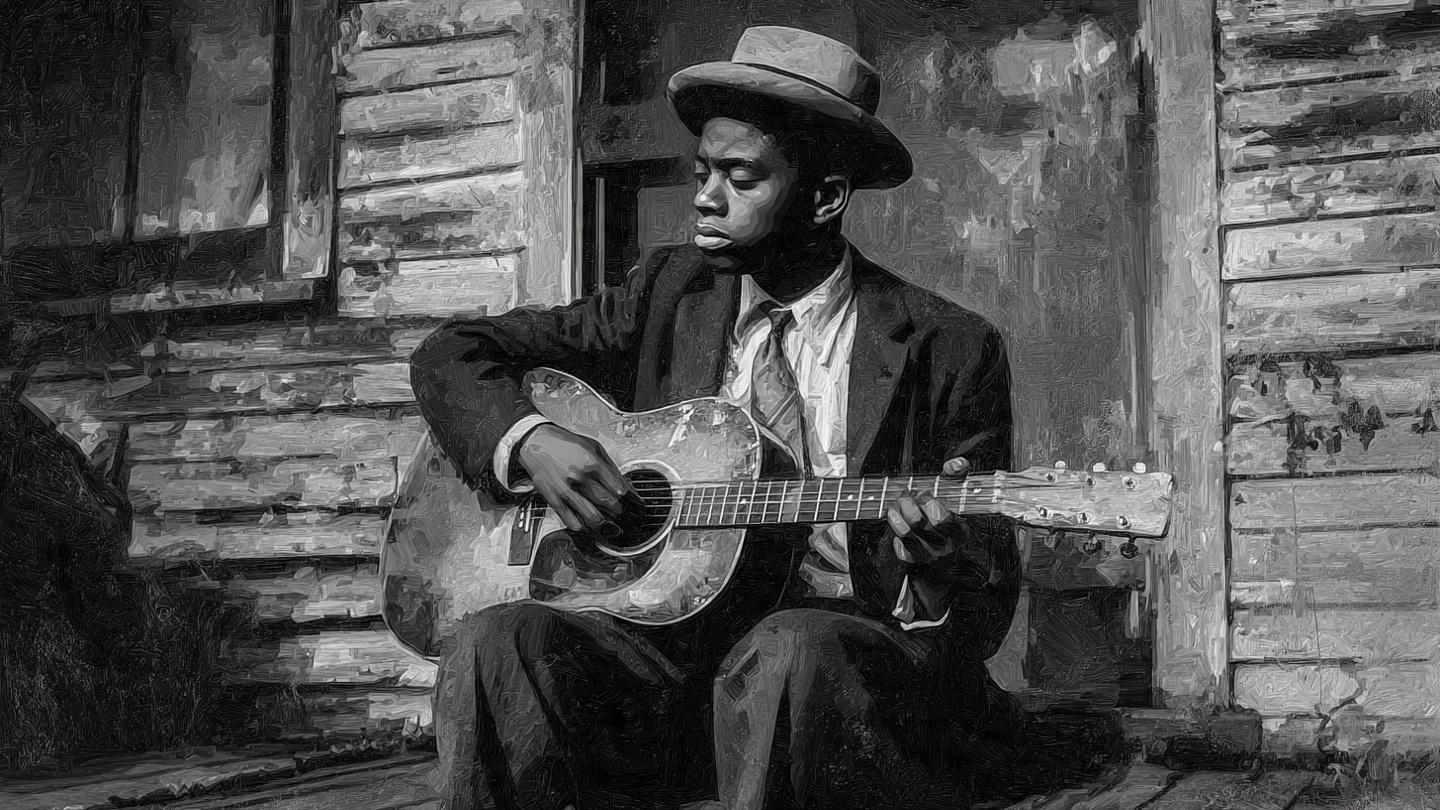

Blind Willie McTell remains one of the most distinctive voices in blues history. Known for his mastery of the twelve-string guitar and poetic storytelling, McTell helped define the Piedmont blues style and influenced generations of musicians across blues and folk traditions.
Born William Samuel McTier around 1898 in Georgia, McTell lost his sight at an early age. Despite this challenge, he developed exceptional musical skill and became a traveling performer whose songs documented life in the American South.
Early Life and Piedmont Roots
Blind Willie McTell grew up in the southeastern United States, where Piedmont blues flourished. This regional style emphasized fingerpicking, melody, and ragtime-influenced rhythms rather than heavy vocal intensity.
Like many early blues musicians, McTell relied on simple, portable instruments. The guitar—especially the twelve-string—allowed him to project sound clearly in streets, train stations, and small venues. This internal article explains the instruments commonly used by rural blues musicians:
👉 https://bluesmusica.com/what-instrument-would-rural-blues-musicians-most-often-use/
Master of the Twelve-String Guitar
Blind Willie McTell’s twelve-string guitar style set him apart from most blues musicians of his time. The added strings created a fuller, richer sound that supported complex fingerpicking patterns.
His playing blended blues, folk, and ragtime elements, creating music that felt rhythmic, melodic, and narrative-driven all at once.
Songwriting and Storytelling
McTell was a gifted storyteller. His lyrics often addressed travel, hardship, faith, and social change. Songs such as Statesboro Blues became enduring classics later covered by rock musicians and blues revivalists.
His storytelling approach showed that blues could function as historical documentation, preserving voices and experiences often ignored by mainstream culture.
Recording Career and Influence
Blind Willie McTell recorded for several labels during the 1920s and 1930s. Although he never achieved major commercial fame during his lifetime, his recordings gained recognition decades later.
His influence extended beyond blues into folk and rock music. Artists such as Bob Dylan openly admired McTell’s work, further cementing his legacy.
This connection between blues and later musical movements is explored further in this internal article:
👉 https://bluesmusica.com/blues-influences-in-contemporary-rock-music/
Cultural Importance and Recognition
Blind Willie McTell represents the intellectual and artistic depth of early blues. His music captured regional identity while remaining universally relatable.
Institutions such as the Smithsonian National Museum of African American History and Culture recognize the importance of blues musicians like McTell in preserving African-American cultural history:
👉 https://nmaahc.si.edu/
Why Blind Willie McTell Still Matters
Blind Willie McTell matters because he expanded the blues beyond emotion into narrative art. His music tells stories with precision, rhythm, and humanity.
Today, his twelve-string sound continues to inspire blues, folk, and roots musicians around the world.
🎥 Blues Live Performance
Experience the living spirit of blues through this performance:


